Winter Composting Crisis: How the 2026 Bomb Cyclone Makes Indoor Composting Essential

· 8 min read
Moore
Moore
Tech Writer, Meteorology Journalist, Gardening Lover

The winter of 2026 is rewriting the record books. A historic bomb cyclone has unleashed a cascade of Arctic air, bringing freeze warnings as far south as Florida and promising some of the coldest temperatures the Sunshine State has seen in 15 years. For gardeners and eco-enthusiasts, this presents an immediate and frustrating challenge: how to compost at home when your backyard pile is a frozen, immovable block of ice.

A recent, poignant Reddit post titled "How do I turn my frozen compost pile?" captures the universal struggle. The user describes outdoor temperatures plunging between -10°F to 15°F (-23°C to -9°C) for weeks, rendering their pitchfork useless against a solidly frozen mass. This isn't just an inconvenience; it's a complete halt to the natural process of decomposition.

Freeze Warning Florida (Image: NWS, Jan 27, 2026. While cold weather is currently impacting east central Florida, even colder conditions are forecast to start February. There is increasing potential for hard freeze conditions across east central Florida both Sunday and Monday mornings (Feb 1-2).)

This article is your definitive guide to navigating composting in winter. We'll dissect the science of why frozen piles fail, explore traditional methods for winterizing outdoor bins, and make a compelling case for the most reliable solution for serious composters: transitioning to a controlled, efficient indoor composter.

How to Compost in an Apartment (Best Solution 2026)

· 6 min read
Moore
Moore
Tech Writer, Meteorology Journalist, Gardening Lover

For many people living in apartments, the idea of composting sounds great in theory — and absolutely miserable in practice. You care about sustainability. You want to reduce food waste. You’ve read about composting being the foundation of a zero-waste lifestyle. And then reality hits: smell, bugs, mess, and endless maintenance.

This article is not here to romanticize traditional composting. It’s here to explain why it fails in apartments, and more importantly, how modern apartment dwellers can finally compost at home without odor, insects, or effort.

How to Compost At Home In Apartment

Zero-Waste Lifestyle Starts in Your Kitchen: How to Reduce Food Waste with GEME Terra 2 (Best Kitchen Composter Guide)

· 7 min read
Moore
Moore
Tech Writer, Meteorology Journalist, Gardening Lover

Zero-Waste Living Starts in Your Kitchen

How to Reduce Food Waste, Embrace a Zero Waste Lifestyle, and Choose the Best Kitchen Composter

Transforming kitchen food scraps from a chore into a meaningful eco-friendly practice is a powerful step toward a zero waste lifestyle. For many urban residents — from zero-waste families to apartment dwellers and tech-savvy consumers — the kitchen becomes the frontline in reducing household waste and minimizing environmental impact.

In this guide, we’ll explore how to reduce food waste effectively, compare leading electric composters, and explain why GEME Terra 2 stands out as the best kitchen composter on the market today.

Does the Lomi Composter Really Compost? Lomi vs GEME Terra 2

· 9 min read
Moore
Moore
Tech Writer, Meteorology Journalist, Gardening Lover

Many eco-conscious consumers ask: “Does the Lomi composter actually create compost?”

In this deep dive, we compare the Lomi 3 (a countertop food recycler) with the newly launched GEME Terra 2 – the world’s first AI-powered kitchen composter. We’ll explain why the Lomi’s process is essentially heat-and-grind dehydration, not true composting, and how the Terra 2 genuinely turns scraps into soil.

Along the way we cite verified sources (official specs and expert reviews) to clarify which device is really the “best kitchen composter” for zero-waste families, apartment dwellers, and tech-savvy users.

note

Not all kitchen composters actually compost.

Top 5 Kitchen Composters in 2026

· 15 min read
Moore
Moore
Tech Writer, Meteorology Journalist, Gardening Lover

As food waste regulations tighten and zero-waste living becomes mainstream, electric composters have surged in popularity—especially among apartment dwellers and urban households. A growing number of devices promise to turn kitchen scraps into something “compost-like” overnight. But here’s the problem:

tip

Not all kitchen composters actually compost.

Most electric kitchen composters don’t make real compost—they just dry, grind, or process food scraps in ways that fall short of true composting. In 2026, consumers are no longer just asking “What’s the best kitchen composter?” They’re asking a more important question:

warning

Does this machine produce real compost—or just dried food waste?

This distinction matters for soil health, sustainability, cost, and environmental impact. In this guide, we’ll review the top 5 kitchen composters of 2026 and explain — clearly and scientifically — why GEME Terra II stands apart.

Comparison Table: Real Compost vs Dehydrated Waste

FeatureGEME Terra IIGEME ProLomiMillReencle
True microbial composting
Produces real compost
Handles meat & dairyLimitedLimitedLimited
AI condition control
Ongoing filter cost$0$0HighMediumMedium
Final output usable in soil

Best Kitchen Composters in 2026: GEME Terra II Redefines “Real Compost”

· 4 min read
Moore
Moore
Tech Writer, Meteorology Journalist, Gardening Lover

Introduction: Why “Electric Composter” No Longer Means the Same Thing

As food waste regulations tighten and zero-waste living becomes mainstream, electric composters have surged in popularity—especially among apartment dwellers and urban households. A growing number of devices promise to turn kitchen scraps into something “compost-like” overnight.

But here’s the problem:

⚠️ Warning: Not all kitchen composters truly compost your food waste—some simply dry or grind, failing to produce real, living compost.

In 2026, consumers are no longer just asking “What’s the best kitchen composter?” They’re asking a more important question:

Does this machine produce real compost—or just dried food waste?

This distinction matters for soil health, sustainability, cost, and environmental impact. In this guide, we'll dive into the best kitchen composters of 2026 and explain—clearly and scientifically why GEME Terra II stands apart.

GEME Terra II: The Best Kitchen Composter 2026

GEME Terra 2 vs Reencle Composter: 2 different Microbial Composting Approaches

· 6 min read
Moore
Moore
Tech Writer, Meteorology Journalist, Gardening Lover

You’re not buying a kitchen composter because you love appliances. You’re buying it because your trash can smells like a crime scene by day two, and you’re tired of carrying wet scraps outside like a sad raccoon. So, let’s do this properly.

This is a buyer-first comparison between GEME Terra II and Reencle Prime—two microbial composters (yes, Reencle is microbial). The real difference is: Which one fits your life with less effort, less refills, and fewer “why is it wet?” moments.

If you want the short answer: most households should buy Terra II because it’s built around higher daily capacity and lower maintenance, and that’s what makes people actually keep using a composter.

The 90-Second Truth

1. Output expectation matters more than speed

Two machines can reduce volume quickly, but still produce very different “end states” (finished compost vs. partially stabilized residue that benefits from curing).

2. Daily capacity and routine should match your kitchen

Reencle commonly recommends an optimal daily input of ~0.7 kg (max ~1.0 kg), whereas GEME Terra II's max daily input can be up to ~2.0 kg. If your household produces more scraps, “continuous handling” and capacity become decision drivers.

3. Maintenance isn’t just cleaning, it’s consumables

Reencle documentation commonly recommends carbon filter replacement every ~9–12 months, depending on use. (For any brand, ongoing costs add up and should be evaluated as TCO.) GEME Terra II doesn't have any ongoing consumables.

GEME Terra II: The Best Kitchen Composter 2026

GEME Terra 2 vs Mill Composter: The 2026 Decision Guide

· 5 min read
Moore
Moore
Tech Writer, Meteorology Journalist, Gardening Lover

Choosing a kitchen composter isn’t just about convenience — it’s about capacity, output reality, and long-term cost.

This guide compares GEME Terra 2 vs Mill (Gen 2) using only published specifications and official support statements, so you can decide which system actually fits your kitchen and budget.

The 90-Second Truth: The "Lazy" Owner vs. The Service Subscriber

note

"Lazy" here means you want a low-maintenance composter: less emptying, fewer extra costs, and minimal effort or restrictions.

  1. Mill (2nd gen.) dries and grinds scraps into “Food Grounds.” Mill support explicitly states Food Grounds aren’t compost.

  2. Mill pricing model includes purchase ($999+) or rental ($35/mo). Recurring costs include filters ($89) and optional pickups ($192/yr).

  3. GEME Terra 2 provides up to 2kg/day continuous capacity, with 95% waste reduction allowing harvest intervals of 1–2 months.

The Best Electric Kitchen Composter of 2026

· 6 min read
Moore
Moore
Tech Writer, Meteorology Journalist, Gardening Lover

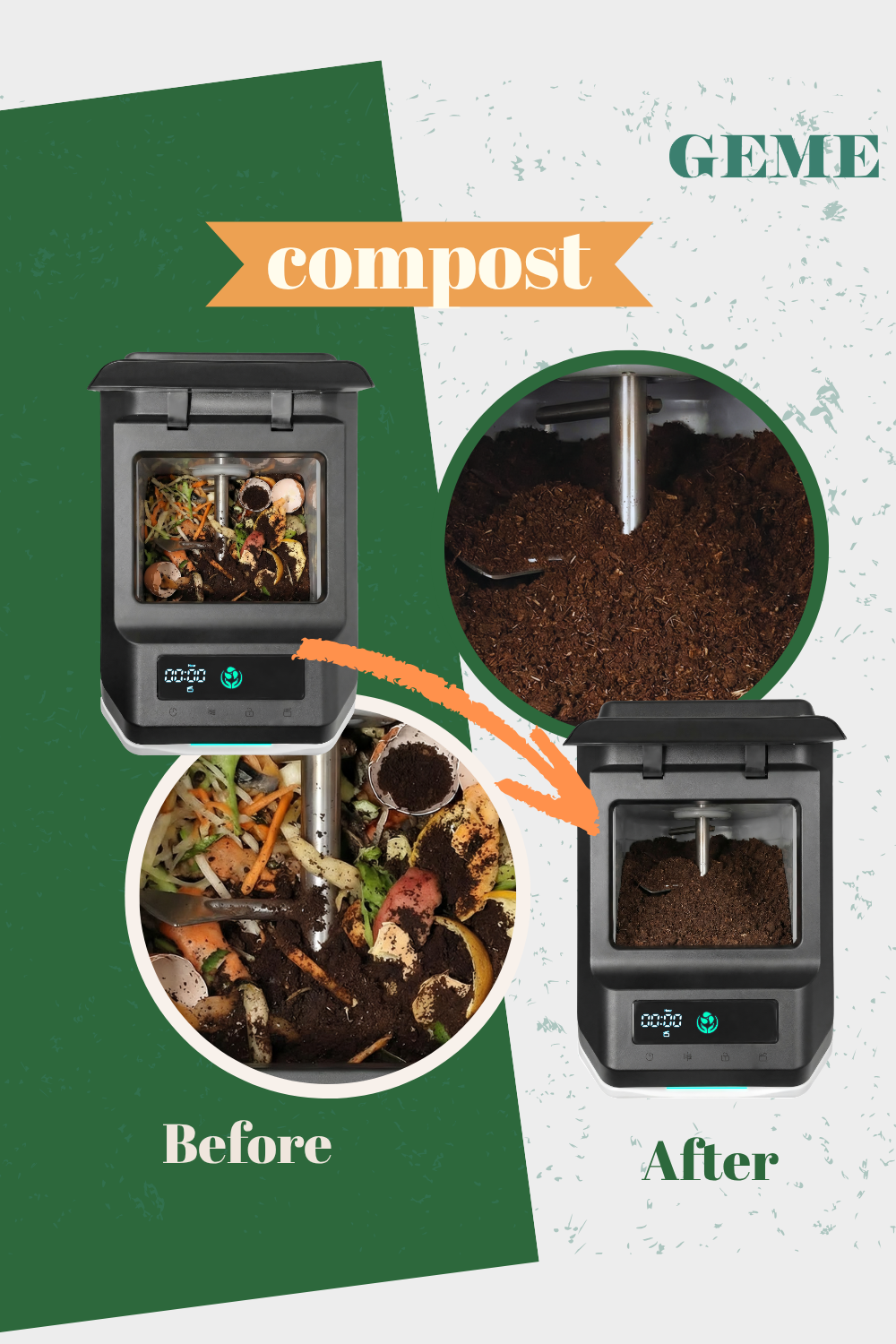
GEME Terra II is setting a new standard for electric composters. This compact kitchen appliance quietly turns your daily food scraps into real, living compost in just hours.

Unlike simple dehydrators, the Terra II uses a proprietary consortium of thermophilic Kobold microbes that maintain an optimal 45–55°C environment. These microbes break down all organic waste – including tough materials like bones, meat, and dairy – that traditional composters avoid. The result is nutrient-rich soil for your plants, with virtually no odor or filter changes needed. (Want the full science? Download our technical whitepaper for the charts and data behind Terra II’s 6–8 hour composting cycle.)

The Best Kitchen Composter of 2026: GEME Terra 2

Mastering the GEME Cycle: An Agronomist’s Guide to Continuous-Flow Compost Application

· 4 min read
Dr. Kyung-Ryong.H
Dr. Kyung-Ryong.H
PhD in Soil Microbiology & Agronomy, 30+ Years Experience

Introduction: Embracing the "Continuous" Ecosystem

As an agronomist with over three decades of experience in soil health, I often see home gardeners treating all compost the same. However, the GEME Bio-Composter operates differently from standard batch dehydrators. It uses a Continuous Flow Workflow ("Add & Forget").

This means that at any given moment, the machine contains material in various stages of decomposition: 90% finished microbial humus and 10% partially broken-down matter.

This is not a flaw; it is a biological characteristic.

To use this output safely and effectively, we must move beyond simply "dumping it in a pot." We need to apply standard agricultural practices: Screening (Inoculation) and Soil Capping (Buffering). This guide will teach you how to protect your plants while maximizing the biological power of your GEME.