Why GEME Terra 2 is the Best Indoor Composter? The Kitchen Composting Solutions

Introduction: What Is the GEME Terra 2?
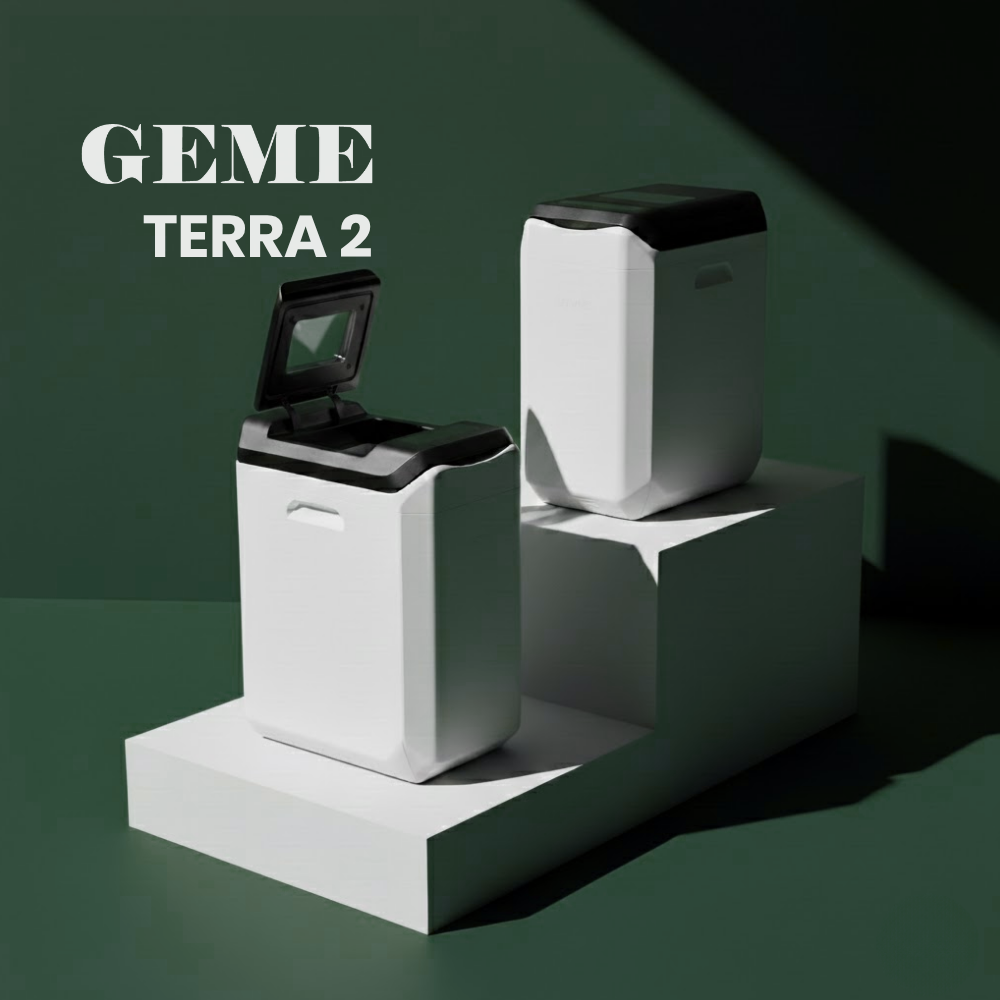
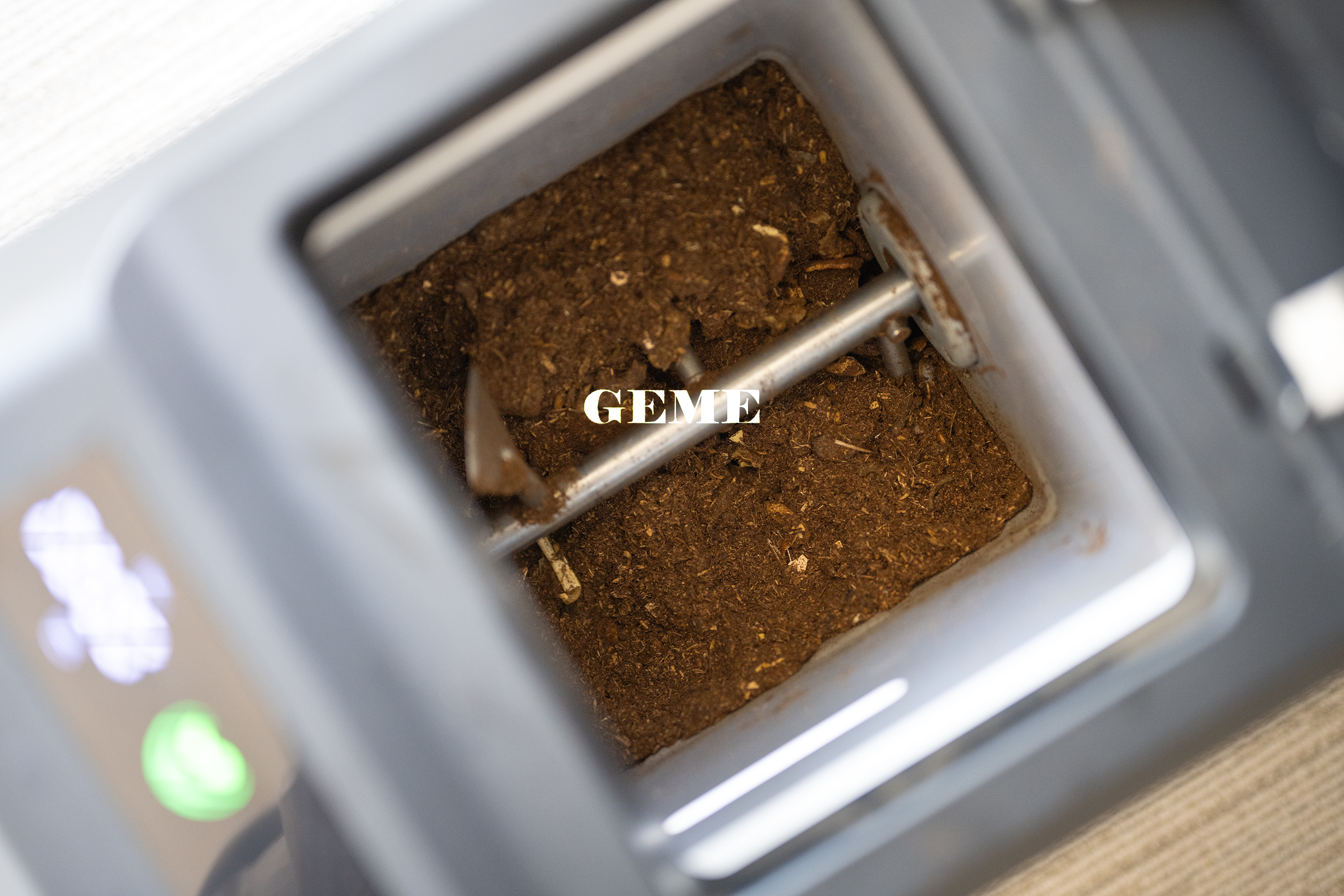
The GEME Terra 2 is a Continuous Aerobic Bio-Processor, a floor-standing, electric kitchen composter that uses a living microbial ecosystem to transform kitchen food scraps into a moist, microbe-active compost base. It is not a dehydrator, not a grinder, and not a kitchen gadget dressed up as a composter. As defined in the official GEME “How It Works” documentation, the machine simulates a compost pile in a contained environment: “The Kobold: Microbes perform most of the work. They reproduce quickly and absorb energy from the food waste. Just like worms consume food, microbes break down waste and produce compost.”
At its core sits GEME Kobold, a proprietary consortium of 46 heat-tolerant Bacillus strains, detailed on the GEME-Kobold product page. Odor is destroyed at the molecular level by a permanent Metal-Ion Oxidation Catalyst, not a disposable carbon filter. The system is continuous-feed: you add scraps anytime, 24/7, exactly like a kitchen bin. And it produces a genuine, soil-ready output, not dried powder. For anyone searching for the best indoor composter, the Terra 2 represents a fundamentally different category from the dehydrator-style machines that dominate the market.
Most “kitchen composters” on the market aren’t composters at all; they’re dehydrators that cook and grind food scraps into dried powder. The difference matters far more than the slick marketing suggests. However, GEME Terra 2 doesn’t dry waste; it runs a living, breathing microbial ecosystem that transforms food scraps into a genuine active compost base. No filters. No subscriptions. No tricks. Here’s exactly why it’s the best indoor composter on the market in 2026, and how to tell the difference between real composting and a convincing imitation.
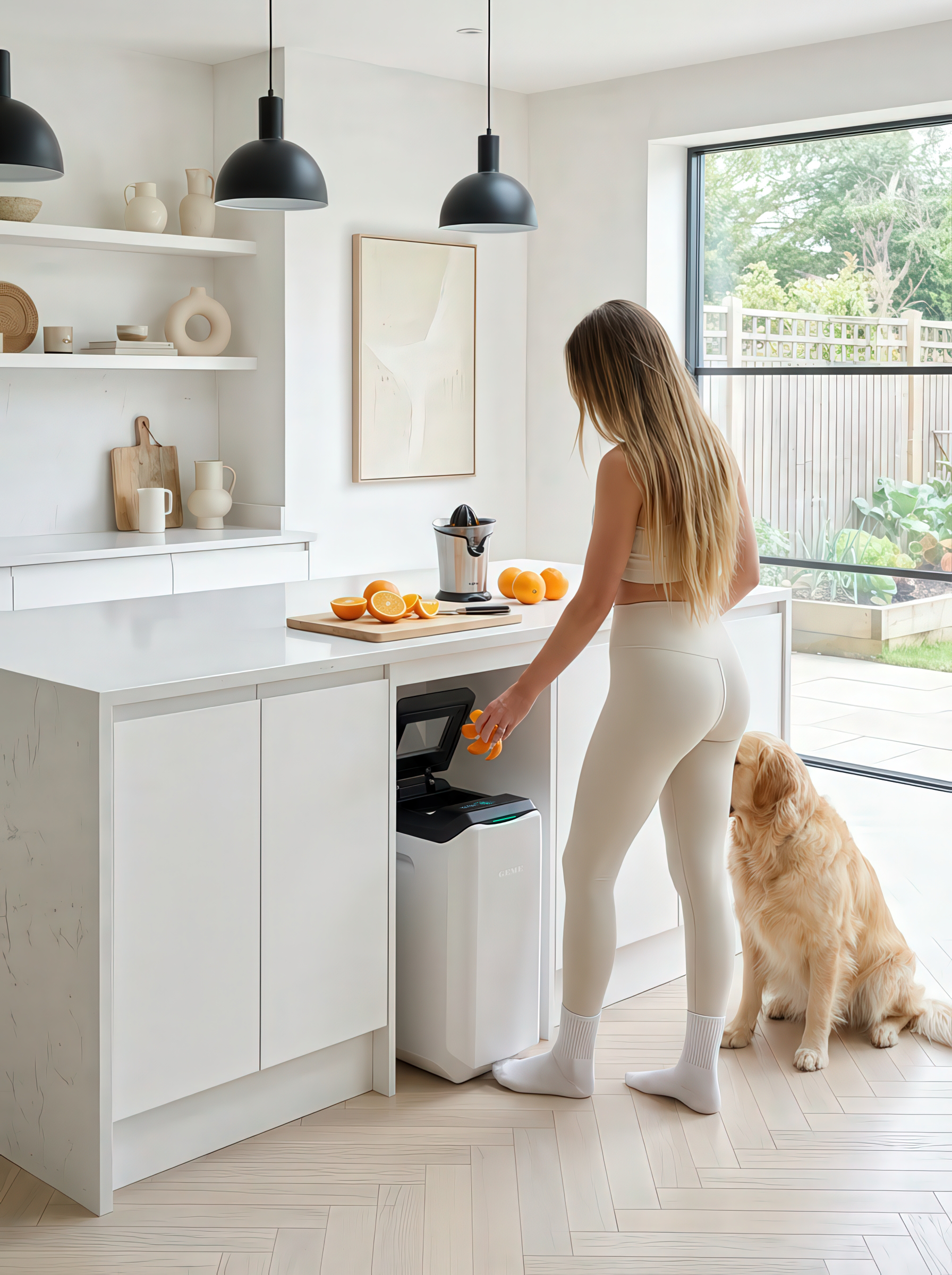
Table Of Content
-
GEME Terra 2: Industrial Composting, Downsized for Your Kitchen
-
What the GEME Terra 2 Produces: Active Compost Base, Not Dried Dust
1. The Deception in the Kitchen Composter Market
Walk through any big‑box retailer or scroll through Amazon, and you’ll see rows of sleek devices labeled “kitchen composters.” The packaging promises odor‑free operation, fast processing, and “compost” in hours. For the millions of consumers searching for the best kitchen composters, it’s incredibly easy to be misled.
The problem? The overwhelming majority of these machines don’t make compost at all.
What Most “Electric Composters” Actually Do
Devices like Lomi, Mill, FoodCycler, and Vego all share the same fundamental technology: electric dehydration with mechanical grinding. The process is physical, not biological. As the Illinois Food Scrap & Composting Coalition documented in their authoritative guide (September 2025): “Food scrap dehydrators do not actually compost… What’s left behind is often called ‘compost,’ but this is misleading. The end product is typically a sterilized, dehydrated food powder, not the biologically active, nutrient-rich humus that results from true composting.”
- Food scraps are dropped into a bucket.
- Heating elements bake the waste at high temperatures, driving off moisture.
- Blades or paddles grind the dried material into a fine powder.
- An activated carbon filter traps odors temporarily. These filters need replacement every 3–4 months.
The output looks convincingly like soil. Manufacturers call it “compost,” “dirt,” or “soil amendment.” Scientifically, it is none of those things. It is sterile, dehydrated organic dust, food scraps with the water removed and all beneficial microbiology killed off.
What Happens If You Use That Dried Output?
The IFSCC’s testing further confirmed that dehydrated output can create problems when applied to soil: “Dehydrated food scraps may still need time to break down in the soil and could temporarily tie up nitrogen during that process.” True compost adds beneficial microbes and helps build soil structure, but dehydrated scraps lack these living organisms entirely. If your goal is actual soil enrichment and you’re looking for the best indoor compost bin for houseplants or a balcony garden, a dehydration machine simply isn’t the answer. You need a genuine biological system.
2. Real Composting Is a Biological Process
True composting is a living phenomenon. It relies on microorganisms, primarily bacteria and fungi, that consume organic matter and convert it into nutrient‑rich humus through aerobic respiration. This is the same process that turns fallen leaves into forest soil, just accelerated and contained through careful environmental management.
As GEME explains in their overview of how real composting works: “The Machine: It simulates a compost pile in a contained environment, ensuring that it will not smell. The Kobold: Microbes perform most of the work. They reproduce quickly and absorb energy from the food waste. Just like worms consume food, microbes break down waste and produce compost.” This is biology in action, not physics. It’s a living ecosystem, not a heated grinder. And that distinction changes everything: the output is a microbially active, ready‑to‑mix‑into‑soil resource, not a dry powder that still has to decompose.
GEME Terra II: Best Kitchen Composter
✅ Best Kitchen Composting Solution
✅ Biologically Active Composting System
✅ Quiet, Odour-Free, Real Compost
✅ Zero Filter Costs, No Refills
✅ Reduces Composting Time to Days
3. GEME Terra 2: Industrial Composting, Downsized for Your Kitchen
The GEME Terra 2 is not just an upgraded kitchen gadget. It is a municipal‑scale organic waste processing plant miniaturized into a floor‑standing kitchen appliance. This core philosophy, what GEME calls “Industrial Engineering, Downsized”, defines every design decision, from the heavy‑duty chassis to the permanent metal‑ion oxidation catalyst to the robust continuous‑feed mechanism.
At the heart of the machine sits GEME Kobold, a proprietary consortium of 46 thermophilic Bacillus strains specifically selected for their ability to decompose diverse organic matter at elevated temperatures. Unlike single‑strain or simple multi‑strain cultures found in competing products, Kobold is a complex, self‑sustaining microbiome, a living ecosystem that adapts to what you feed it. As detailed on the official GEME Kobold product page: “GEME Kobold significantly contributes to organic matter recycling. It comprises 46 complex, heat-tolerant aerobic bacillus bacteria. Within 6-8 hours, it can decompose various bio-wastes, producing high-activity organic fertilizer.”
How the GEME Terra 2 Works
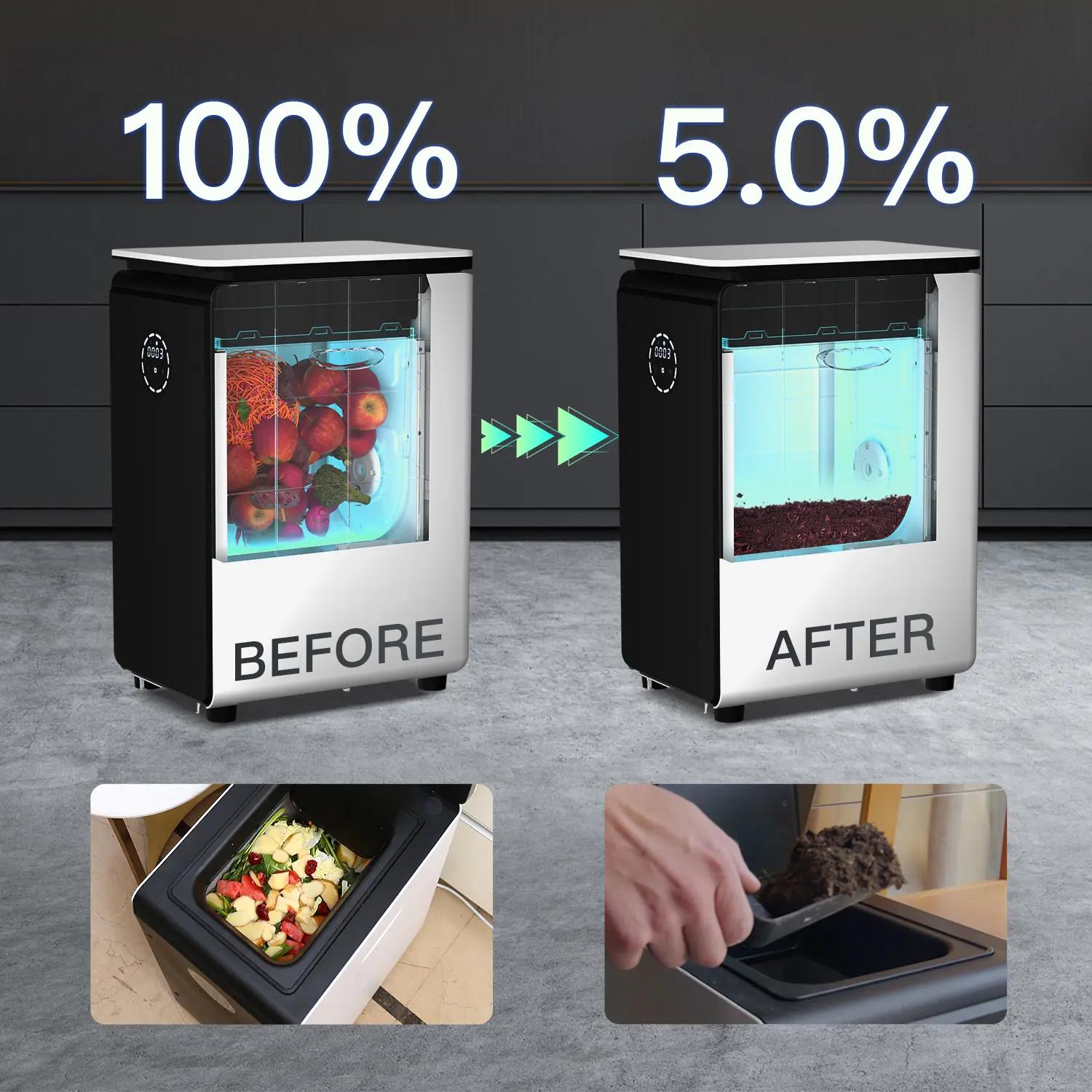
The process mirrors industrial‑scale aerobic digestion, miniaturized for the kitchen. As GEME’s “Magic? No! It’s science!” blog post explains: “In the optimal humidity, temperature and aerobic environment provided by GEME, GEME Kobold maximizes the fastest possible reproduction and decomposition of organic waste, turning them into 95% clean air and 5% organic compost.”
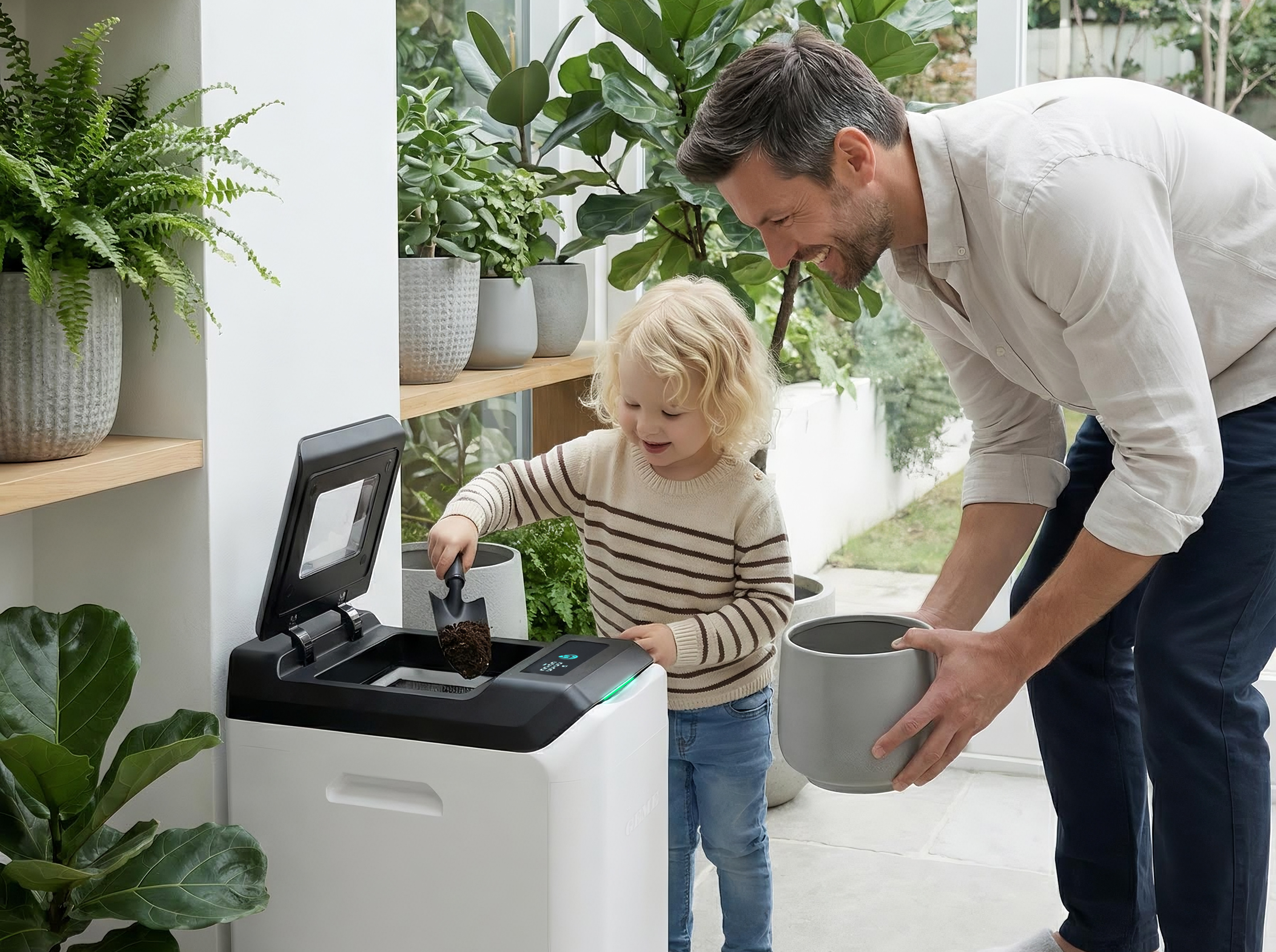
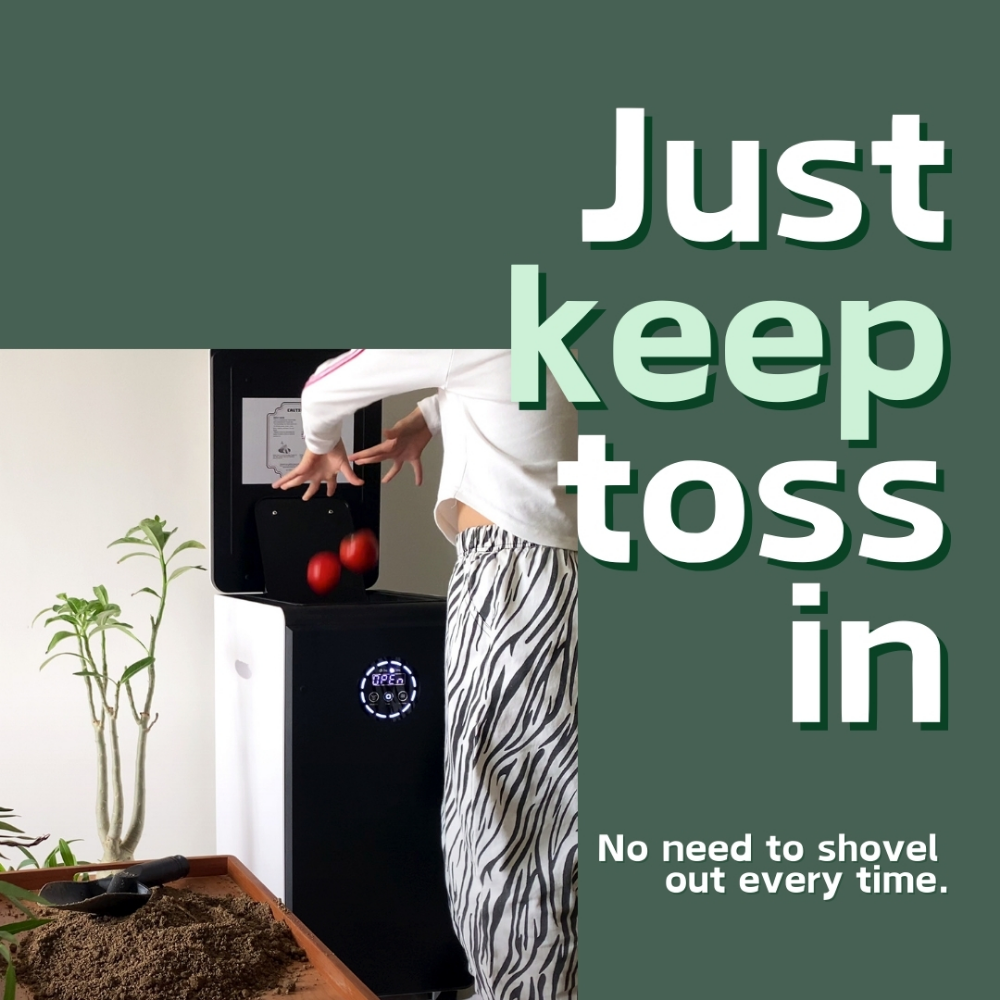
- Drop in food scraps anytime. The system is continuous‑feed, with no waiting for a batch to finish, and no need to press a start button. The lid is opened via a kick panel at the bottom front. Add your scraps, close the lid, and the machine handles everything automatically.
- Microorganisms go to work immediately. The Kobold culture, living in a controlled 45–55°C environment, begins breaking down complex organic compounds within minutes. Proteins, fats, fibers, and even small bones are progressively decomposed.
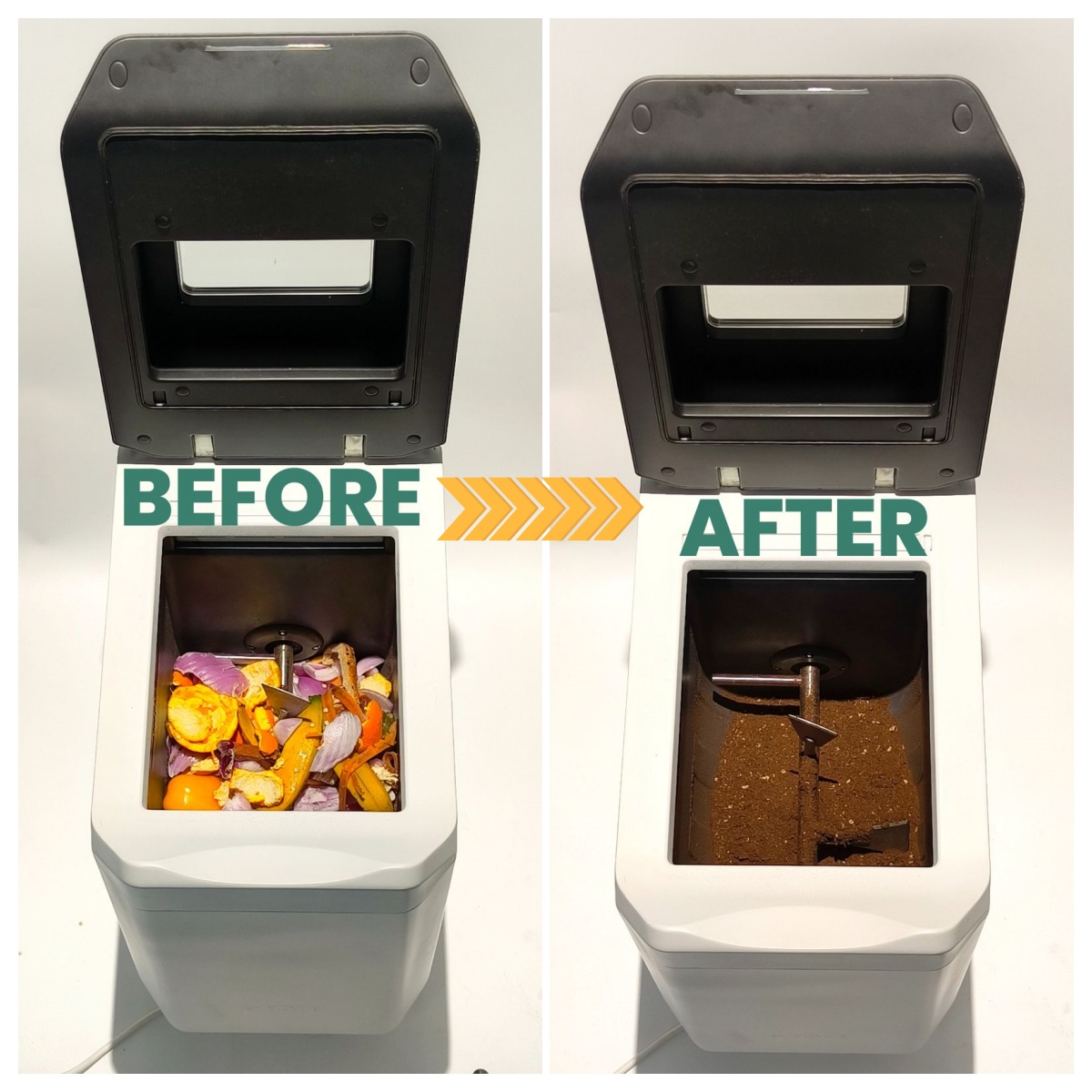
- Mass is biologically mineralized. Up to 95% of the input mass is converted into CO₂ and water vapor through microbial respiration. Only about 5% remains as a moist, soil‑like active compost base.
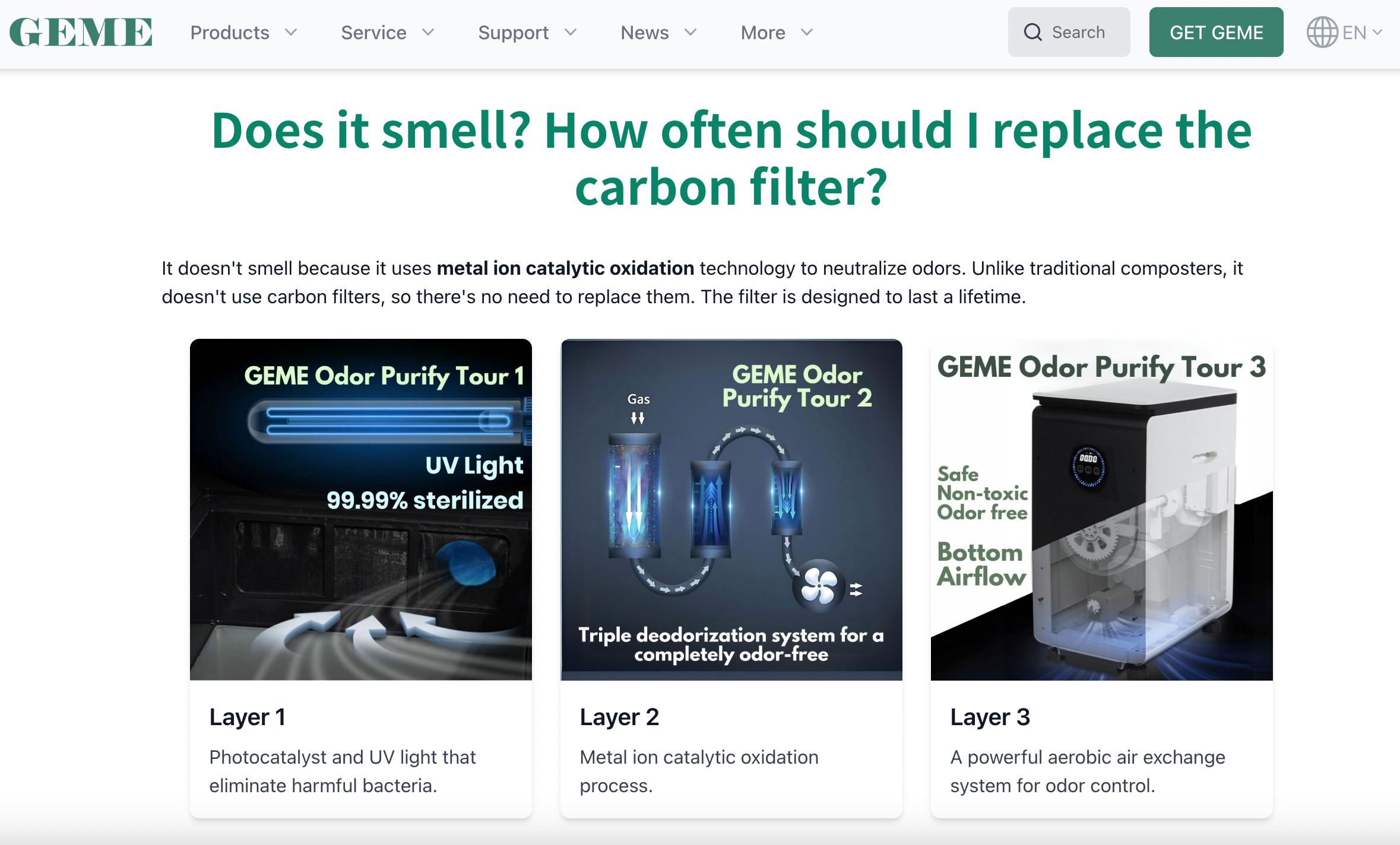
- Odor is neutralized at the source. The Metal‑Ion Oxidation Catalyst, an industrial‑grade air treatment system, destroys volatile organic compounds as air passes through the unit. There are no carbon filters to saturate, replace, or pay for. The catalyst is permanent and designed to last the machine’s lifetime.
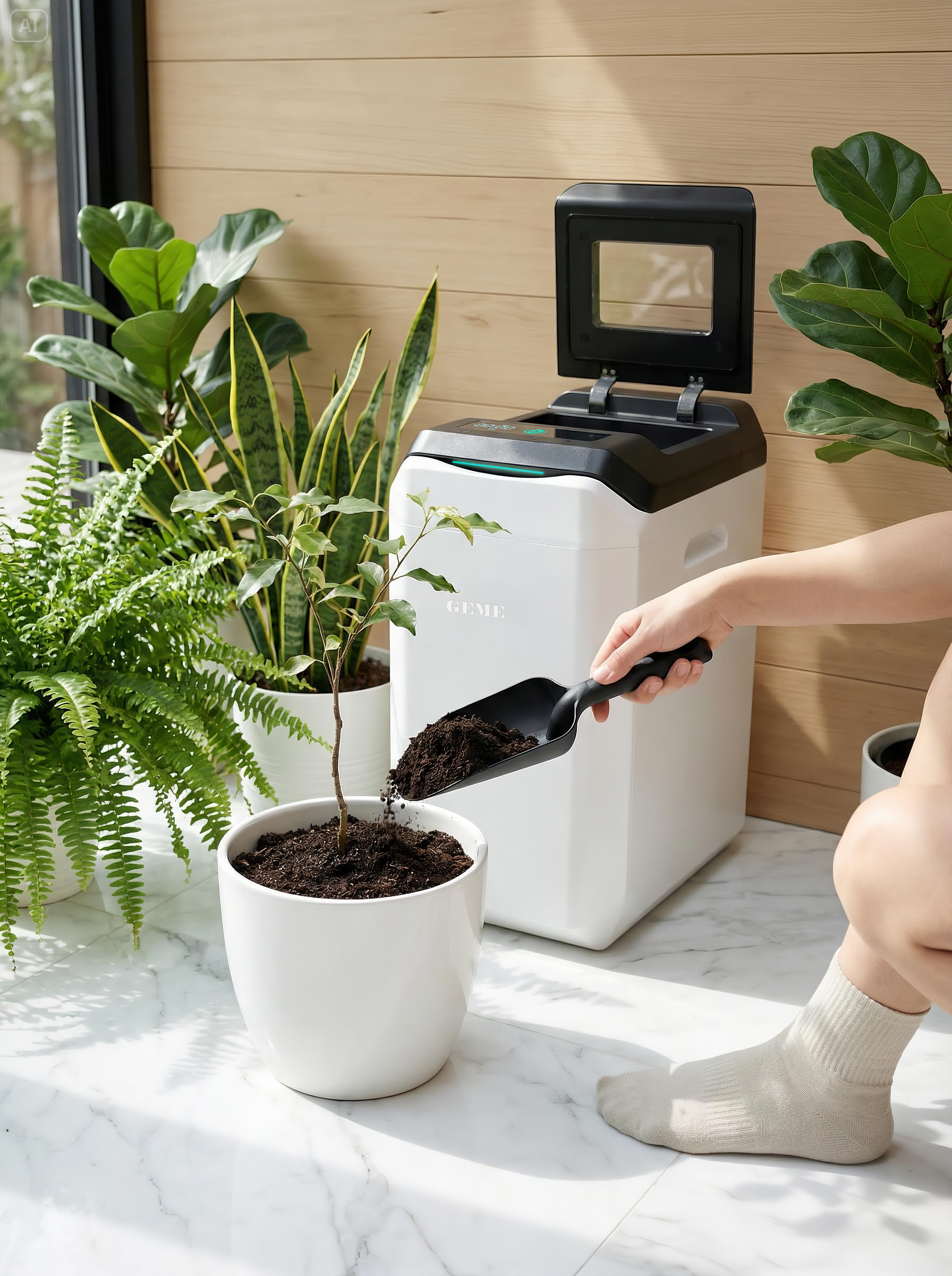
- Output is scooped out directly. The fixed chamber has a non‑stick interior surface. When finished material accumulates, you simply scoop it out. Any larger undigested pieces are sifted out and returned to the chamber for further breakdown, exactly the “Sift & Return” workflow of an industrial continuous‑feed system.
Key Technical Specifications (GEME Terra 2)
| Specification | Value |
|---|---|
| Technology | Continuous Aerobic Bio‑Processor (continuous‑feed microbial digestion) |
| Microbial Culture | GEME Kobold, 46 thermophilic Bacillus strains |
| Processing Capacity | Up to 2 kg of food waste per day |
| Chamber Volume | 14 liters |
| Mass Reduction | ~95% converted to CO₂ and water; ~5% retained as active compost base |
| Odor Control | Metal‑Ion Oxidation Catalyst, lifetime, no replacement, no subscription |
| Power Consumption | Average 60W / Peak 360W / ~1.5 kWh per day |
| Noise Level | 35-40 dB |
| Dimensions (W×D×H) | 320 × 455 × 665 mm |
| Weight | 19.5 kg |
| Certifications | CE, FCC, ISO 9001, ISO 14001, ISO 45001 |
| Warranty | 1 year |
Specifications drawn from GEME Terra 2 product documentation and the official Kobold technical overview.
4. What the GEME Terra 2 Produces: Active Compost Base, Not Dried Dust
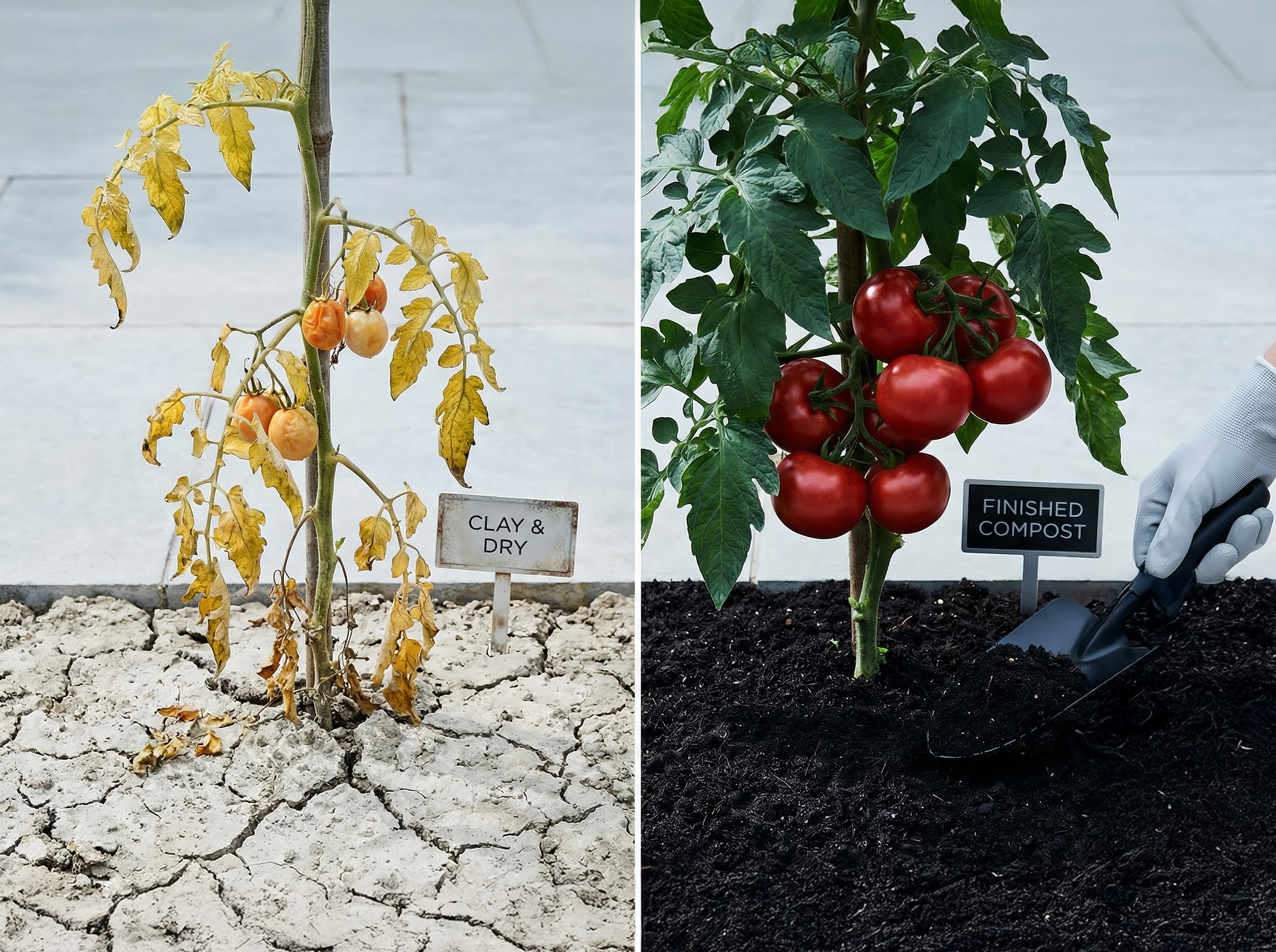
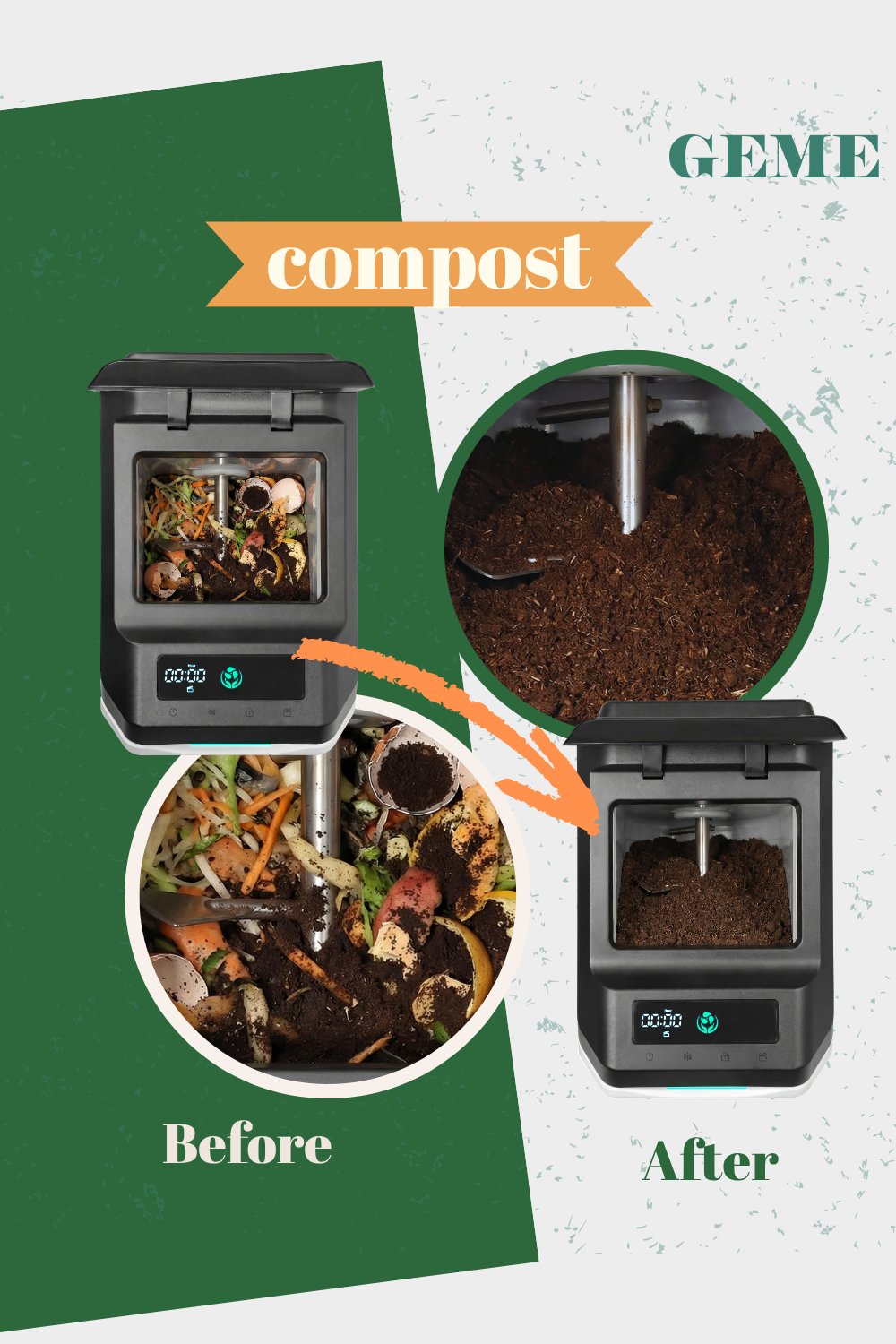
Let’s be precise about the output. The GEME Terra 2 produces a moist, microbe‑active compost base, a soil‑ready amendment containing living microorganisms and decomposed organic matter. It should feel like damp soil, hold together when squeezed, and smell like a healthy forest floor.
This output is:
- Ready to mix into soil at a recommended ratio of 1:8 or 1:10 (compost to soil, adjusted by plant sensitivity).
- Biologically active, containing beneficial Bacillus that continue working in the soil. As GEME’s 2026 kitchen composter roundup confirms, Terra II produces “real, living compost in just hours”, not dehydrated “dirt.”
- Variable in maturity, as a continuous‑feed system, maturity changes with feeding rhythm and curing time. Material can be further cured in a ventilated container if a milder end product is desired.
It is not:
- A dehydrated powder or crumb.
- A sterile “finished compost” with an identical maturity every time.
- Something that must be mailed away for further processing.
The distinction matters. Dehydrators give you dead material that still needs to decompose. The GEME Terra 2 gives you living material already in the soil‑building cycle. One is trash management; the other is resource regeneration.
GEME Terra II: Best Kitchen Composter
✅ Best Kitchen Composting Solution
✅ Biologically Active Composting System
✅ Quiet, Odour-Free, Real Compost
✅ Zero Filter Costs, No Refills
✅ Reduces Composting Time to Days
5. Why the GEME Terra 2 Beats Every Other Indoor Composter
1. Zero Ongoing Costs Forever
This is the single most important reason informed buyers choose the GEME Terra 2. Most electric “composters” depend on activated carbon filters that saturate every few months and must be replaced. Over time, those costs add up dramatically. As GEME’s dedicated recurring‑fee comparison makes plain: “The GEME Terra 2 is the only kitchen composter on the market with zero recurring fees. Lomi costs you about $150–$200 per year in filters, Mill runs around $89 annually plus optional pickup fees at $192 per year, and Reencle adds about $47 per year for replacements. Over three years, that’s hundreds of dollars you didn’t plan on spending.”
A separate GEME filters‑cost comparison spells out the granular numbers: Lomi’s filter 2‑pack sells for about $54 every 3–4 months (roughly $100/year), Mill’s carbon filter costs $89 each (lasting ~1 year), and Reencle sells replacement carbon filters at $35 each plus mesh filters at $12, totaling about $47 per year.
| Product | Annual Filter / Consumable Cost | 3‑Year Ongoing Cost |
|---|---|---|
| GEME Terra 2 | $0 (permanent metal‑ion catalyst) | $0 |
| Lomi | ~$150–$200 (charcoal filters) | ~$450–$600 |
| Mill | ~$89+ (carbon filters) or $396+ (subscription) | ~$267–$1,188 |
| Reencle | ~$47–$50 (filter + culture refresh) | ~$140–$150 |
The permanent catalyst in the Terra 2 fundamentally changes the economics of owning a kitchen composter. In just three years, the savings compared to a Lomi or Mill can be nearly enough to buy a second Terra 2.
2. Real Compost Output from Day One
While dehydrator owners are figuring out where to bury their dried powder so it can actually decompose, GEME Terra 2 owners are mixing fresh, active compost into potting soil and seeing their houseplants respond. A real‑world performance test by Kitchen Compost Bins (December 2025) found that “the GEME Terra 2 delivers outstanding real-world performance in speed, odor control, and ease of use. Its efficient design, quiet operation, and minimal maintenance requirements make it one of the most balanced options in the electric kitchen compost bin category.” The compost was “dry, fine, and odor‑neutral” and “ideal for quick garden application.”
3. Handles Everything from Meat to Small Bones
The Kobold microbial consortium tackles a significantly wider range of inputs than any other home composting system. Meat scraps, dairy leftovers, fish, small bones, greasy foods are all accepted without triggering odor spirals. The thermophilic Bacillus strains thrive at temperatures that would suppress common soil organisms. GEME’s 2026 best‑composter guide confirms that Terra II’s 46‑strain Kobold microbiota breaks down “all organic waste, including tough materials like bones, meat, and dairy, that traditional composters avoid.”
4. Industrial Durability, Designed for 24/7 Operation
The Terra 2 weighs 19.5 kg, approximately 43 pounds. That weight isn’t bulk; it’s structural integrity. The heavy‑duty chassis and robust motor are engineered for continuous, multi‑year operation, not occasional weekend use. Where competing lightweight plastic units were built for light, periodic loads, the Terra 2 is designed to process heavy, mixed loads day after day. As the “Magic? No! It’s science!” blog notes: “Intelligent thermal protection and open lid stop function allows children and the elderly to use it with confidence… No need to clean after use, this is the essence of convenient life; No need to replace the filter and automatic intelligent start-stop energy-saving settings, so you use it at a low cost.” This is a machine built to run 24/7, not just on weekends.
5. No Filter Changes, No Subscriptions, No Hidden Fees
The Metal‑Ion Oxidation technology at the core of the permanent deodorization system is the same principle used in industrial air treatment facilities, miniaturized for home use. It oxidizes odor‑causing volatile organic compounds at the molecular level, passing clean air back into your kitchen. And it never wears out. As GEME’s 2026 “best composter” article emphasizes, the Terra II uses “a permanent metal-ion filter (no replacements)” with “Filter Cost: $0 (lifetime).” This is what “lifetime” truly means: you buy the machine, you own the machine, and the machine keeps doing its job without asking for another cent.
6. GEME Terra 2 vs. Competitors: The 3‑Year Total Cost Picture
The table below shows the real numbers, not just the upfront price, but what you actually pay after three full years of ownership. Mill itself provides an honest benchmark. In its own support documentation, the company plainly states: “The food-recycling Mill isn’t a composting device. The Food Grounds that come out of the bin are still food, minus the water, bulk, odor, and ick.” And over on the Mill‑vs‑composter landing page, the company reiterates: “There are many in-home appliances that dry and grind food scraps, but none of them actually produce compost. No matter what they might say, they all produce dry grounds. These ‘electric composters’ are actually food recyclers.” Mill’s transparency is commendable. But it also means that anyone comparing the best kitchen composters needs to understand that a Mill (or Lomi) isn’t playing in the same category as a GEME Terra 2.
| Feature | GEME Terra 2 | Lomi / Mill | Reencle Prime |
|---|---|---|---|
| Type | True Microbial Bio‑Processor | Dehydrator / Heater‑Grinder | Microbial Composter |
| Output | Active compost base (living, soil‑ready) | Dry, sterile powder (“grounds”) | Microbially active pre‑compost |
| Odor Control | Permanent Metal‑Ion Catalyst | Carbon filter (replacement required) | Carbon filter (replacement required) |
| Annual Consumable Cost | $0 | $89–$396+ | ~$47–$50 |
| Meat & Dairy | Yes, handled without issue | Limited or not recommended | Yes (small amounts preferred) |
| Chamber Volume | 14L | 2.5–6.5L | Smaller capacity |
| Processing Type | 24/7 continuous‑feed | Batch cycles | Continuous microbial |
| Upfront Price | $599 | ~$299–$999 | ~$500–$550 |
| 3‑Year Total Cost | $599 | ~$900–$2,600+ | ~$640–$700 |
Cost data sourced from GEME’s recurring‑fee comparison, the filters‑cost breakdown, and BillionHands’ Reencle Prime listing which confirms Reencle’s annual filter costs of approximately $47.
The math is unambiguous. A Lomi owner who keeps their machine for five years will spend more on filters than the machine cost initially. A Mill subscriber will spend more in monthly fees than the retail price of two GEME Terra 2 units. In the meantime, the Terra 2 just keeps running, no store runs, no subscription renewals, no filter reminders. If you want to get into the weeds of what daily life actually looks like with each machine, GEME’s daily‑operation comparison walks through four real‑world kitchen scenarios with level‑headed honesty.
👉 Learn More About GEME Terra II
👉 Explore GEME Pro for Big Households/Plant Shops/Restaurants
GEME Terra II: Best Kitchen Composter
✅ Best Kitchen Composting Solution
✅ Biologically Active Composting System
✅ Quiet, Odour-Free, Real Compost
✅ Zero Filter Costs, No Refills
✅ Reduces Composting Time to Days
7. Who the GEME Terra 2 Is For (And Who Might Want Something Else)
The Terra 2 isn’t for everyone. Here’s the honest breakdown.
The GEME Terra 2 Is Ideal For
- Urban apartment dwellers who want a genuinely zero‑odor, hands‑off solution. The permanent catalyst neutralizes all odors, and the noise level is whisper‑quiet, as confirmed by Kitchen Compost Bins’ real‑world testing.
- Gardening enthusiasts who want a steady supply of homemade active compost for houseplants, balcony gardens, or raised beds. The output is ready to mix into soil, no “wait for it to break down further” caveats.
- Families processing heavy food waste loads. The 14L chamber and 2 kg/day capacity comfortably handle the daily output of 1-3 people.
- Anyone exhausted by recurring fees. You buy the machine. That’s it. No reminders to replace a carbon filter. No subscription that keeps charging your card. As GEME’s fee‑comparison bluntly puts it: “GEME Terra 2 is the only kitchen composter on the market with zero recurring fees.”
Consider Alternatives If
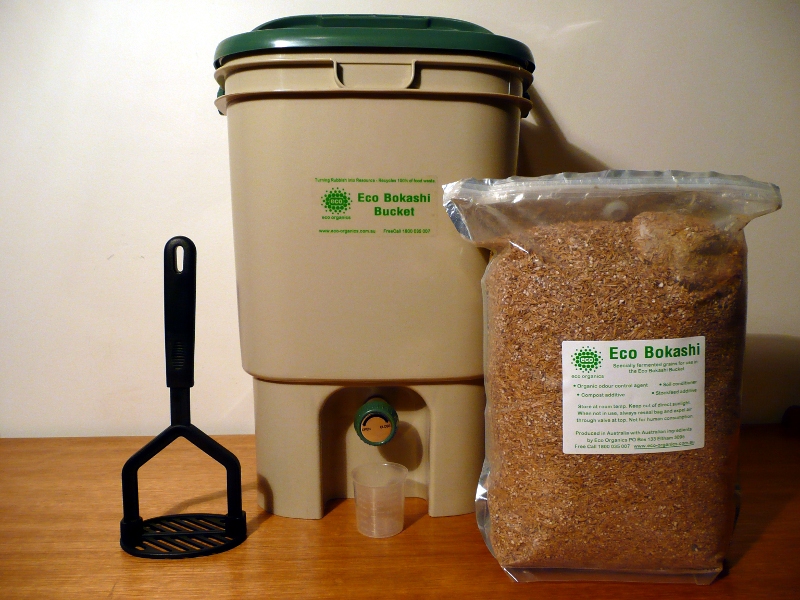
- You’re on a very tight upfront budget and cannot stretch to $599. A Bokashi system (~$65 + ~$15/year bran) ferments scraps in a sealed bucket with genuinely zero odor. The trade‑off is a two‑step process: fermentation, then burial or soil‑factory finishing. It works, but it requires more hands‑on effort.
- You genuinely enjoy tending a living system and want the project aspect. Worm composting produces exceptional castings but demands weekly attention, moisture monitoring, and careful green/brown balance. It’s a great fit for those who find that kind of micro‑management rewarding.
Check this post: Are There Any Odor-Free Composting Options Suitable for Apartments?
8. The Environmental Case: Why Real Composting Matters
When food waste goes to landfill, it decomposes anaerobically, producing methane, a greenhouse gas roughly 25 times more potent than CO₂ over a 100‑year timeframe. Diverting food waste from landfills is one of the single most impactful actions a household can take.
The difference between dehydrating and real composting isn’t trivial for the environment. Dehydrator‑style machines shrink waste volume, but the output still must go somewhere. If it ends up in landfill because a user doesn’t have a garden or a mail‑back service, the waste has been delayed, not diverted. As the IFSCC emphasizes, “Calling dehydrated scraps ‘compost’ confuses consumers, weakens compost education efforts, and distorts public understanding of sustainable waste practices.”
The GEME Terra 2 closes the loop entirely. Up to 95% of input mass is biologically mineralized into CO₂ and water vapor through microbial respiration, carbon that was recently captured by plants, not fossil carbon. The remaining 5% becomes an active compost base that builds soil organic matter, improves water retention, and supports plant growth, directly sequestering carbon in your own soil. And because everything happens on‑site, there are no transportation emissions, no packaging waste, and no external processing infrastructure required. As GEME’s science explainer summarizes: “We are not miracle workers, we are simply practitioners of the laws of nature.”
9. Frequently Asked Questions (Answered)
Q: Is the GEME Terra 2 actually making compost?
A: Yes, but with important precision. The Terra 2 produces a microbe‑active compost base, moist, biologically alive material designed for immediate soil integration. Because the system is continuous‑feed (not batch), maturity varies with feeding rhythm and curing time. The output is ready to mix into soil at a 1:8 or 1:10 ratio and is chemically and biologically distinct from dehydrated “dirt.” For those who want extended curing, the material continues to mature in a ventilated container.
Q: Why doesn’t the GEME Terra 2 need filter replacements?
A: It uses Metal‑Ion Oxidation Catalyst technology, the same principle used in industrial air treatment systems, miniaturized for home use. The catalyst oxidizes volatile organic compounds (the source of odors) at the molecular level, passing clean air back into your kitchen. Unlike carbon filters, which physically trap compounds and eventually saturate, the catalyst is permanent. As GEME’s 2026 best‑composter guide specifies: “Permanent metal-ion filter (no replacements)… Filter Cost: $0 (lifetime).”
Q: How much does it cost to run per year?
A: Beyond the upfront purchase ($599), ongoing costs are effectively $0. No filters. No subscriptions. No required culture refills. The Kobold microbial culture is self‑sustaining; an optional Kobold Boost Pack is available for users who want to accelerate processing after their first harvest or during high‑load periods, but it’s not required for daily operation. Electricity consumption is approximately 1.5 kWh per day, roughly $0.15–$0.20/day depending on local rates.
Q: Can it handle meat and dairy?
A: Yes. The 46‑strain thermophilic Kobold consortium thrives at 45-55°C and processes protein, fat, and dairy without odor spirals or pest issues. As GEME’s 2026 best‑composter overview states, Terra II “breaks down all organic waste, including tough materials like bones, meat, and dairy that traditional composters avoid.” Small bones (chicken wings, fish bones) are ground down during the mixing process. Large bones and hard shells (oyster, clam) should be avoided.
Q: How do I clean the GEME Terra 2?
A: Scoop finished material out directly; the non‑stick interior releases most matter easily. Wipe down with a damp cloth as needed. For deeper cleaning every 3-6 months, use soapy water and a soft brush. Always leave a small amount of material in the chamber as a starter bed to maintain microbial continuity.
Q: Does the Terra 2 smell during operation?
A: No. The aerobic process itself doesn’t produce methane or putrefactive sulfur compounds, and the permanent metal‑ion catalyst destroys any volatile organic compounds at the molecular level. The Kitchen Compost Bins real‑world test confirmed “odor‑neutral” finished compost, and GEME’s daily‑operation comparison notes that GEME owners “haven’t thought about filters or subscriptions in months, because there aren’t any.”
Q: Which is the best kitchen composter for a small apartment?
A: For apartments with no outdoor space, a real electric composter like the GEME Terra II is ideal because it produces finished compost you can use on indoor plants immediately, with no extra subscriptions or outdoor piles required. Check this post: The Best Composter For Small Kitchen
Q: Why aren't dehydrator machines like Lomi considered composters?
A: Because they don't biologically decompose food waste. They heat and grind scraps into a dry powder that is sterile, not compost. It still needs to break down in soil and can harm plants if used directly. Real composting always involves microbial digestion.
Check the following posts:
GEME Terra II: Best Kitchen Composter
✅ Best Kitchen Composting Solution
✅ Biologically Active Composting System
✅ Quiet, Odour-Free, Real Compost
✅ Zero Filter Costs, No Refills
✅ Reduces Composting Time to Days
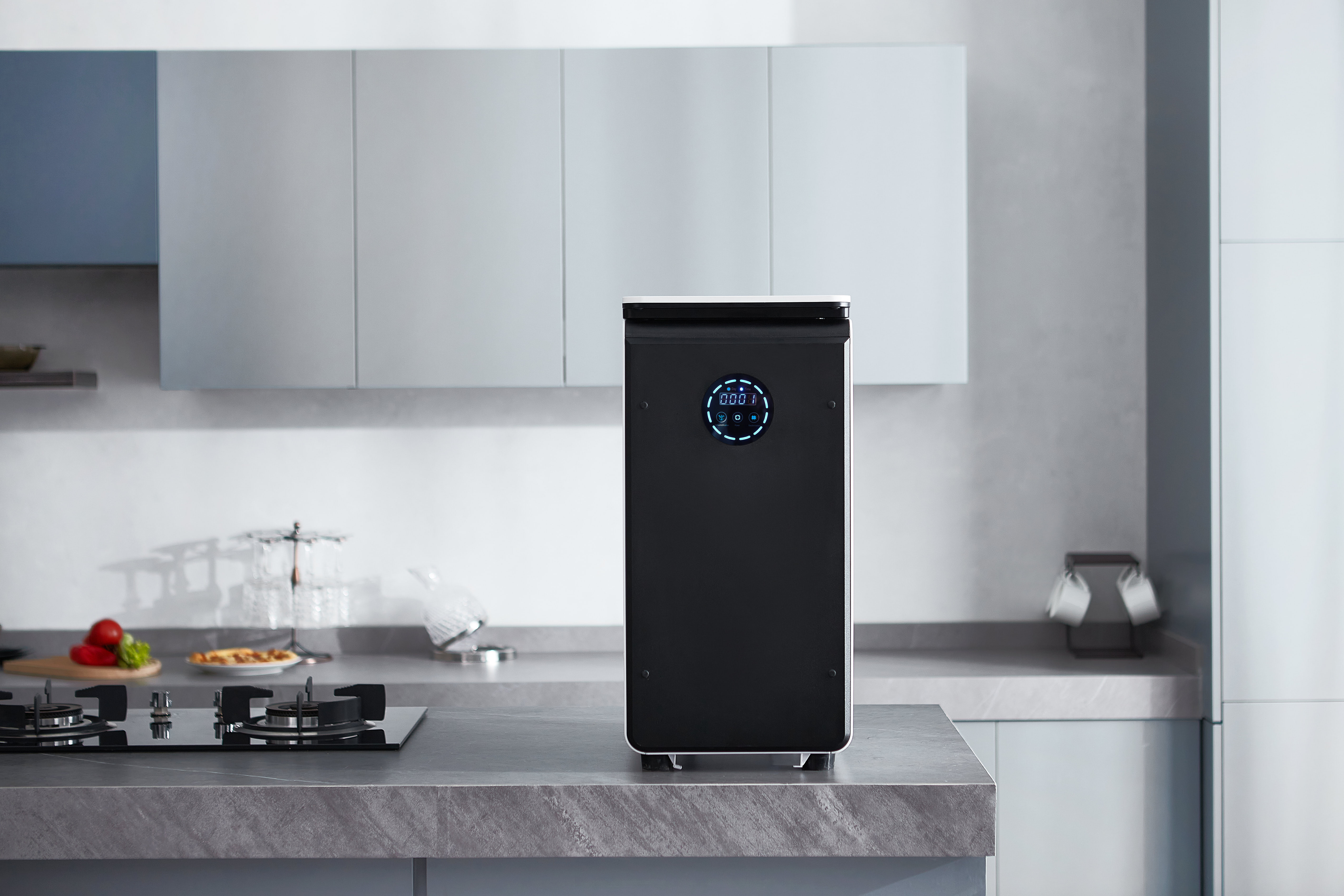
GEME Pro Composter
✅ Best Composter With No Hidden Costs
✅ Produce Soil-Ready Compost For Plant Growth
✅ Quiet, Odor-Free, Quick(6-8 hours)
✅ Large Capacity (19 L) For Daily Waste
Cited Sources
-
Illinois Food Scrap & Composting Coalition. (2025, September). Debunking the Myth: Food Scrap Dehydrators Are Not Composters
-
GEME. (n.d.). How it works – GEME Terra 2 FAQ.
-
GEME. (n.d.). GEME-Kobold.
-
GEME. (n.d.). Magic? No! It’s science!.
-
GEME. (2026, January). The Best Electric Kitchen Composter of 2026.
-
GEME. (2026, March). The Best Composter for Avoiding Recurring Fees: GEME Terra 2 vs. Lomi, Mill, and Reencle.
-
GEME. (2026). Electric Compost Bin Filters & Costs Comparison.
-
Mill. (n.d.). How often do I need to replace my carbon filter and how much does it cost?
-
Reencle. (n.d.). Reencle Prime Filter
-
Reencle. (n.d.). Reencle Mesh Filter
-
Kitchen Compost Bins. (2025, December). Real World Test: GEME Terra 2 Performance
-
Mill. (n.d.). How is Mill different from home composting devices?
-
Mill. (n.d.). Mill vs Composter
-
BillionHands. (n.d.). Reencle Prime
-
GEME. (2026, March). Best Composter: Daily Operation Comparison (Lomi, Mill, Reencle, GEME).
Related Articles
Are There Any Odor-Free Composting Options Suitable for Apartments?
Does Mill Composter Produce Real Compost?
Mill Composter V.S GEME Terra II: The Best Electric Kitchen Composter in 2026

GEME Composter: The Best Electric Kitchen Composter For Mother's Day

Mother's Day Discount: Get $150 Off for GEME Electric Composter, Let It Do the Kitchen Work for Mom
Lomi vs GEME Terra 2: The Truth About Home Composters for Apartments
The Best Kitchen Composter for a Zero Waste Lifestyle (2026)
Can an Electric Composter Handle Salt & Oil? (Boundaries + Best Practices)
GEME Terra II: The Silent Gearbox

Get $100 OFF: GEME Composter Discount Codes on Amazon for Earth Day, 2026
How to Avoid Food Poisoning Related to Leftovers: The Science Behind Leftover Food
GEME Composter vs DIY Bokashi: Which Should You Choose?
Permanent Odor Control: Catalyst Path vs. Disposable Carbon
GEME Composter Review 2026: Real Compost, No Filter costs
Why is the GEME chassis intentionally heavier than a typical countertop appliance?

How to Plant Tulips in Spring
How to Compost at Home: A Complete Beginner's Guide
What Can You Put in an Electric Composter? Meat, Dairy, Bones (Clear Rules + Hard Limits)

Can an Electric Composter Handle Salt & Oil? Boundaries for Real Leftovers (Without the Myths)
Mastering the GEME Cycle: An Agronomist’s Guide to Continuous-Flow Compost Application

Countertop Composter Is a Misnomer: Where an Electric Composter Actually Belongs in a Real Kitchen
Top 5 Electric Composters on Amazon: 2026 Buyer’s Guide
GEME Terra II: The Pros and Cons
Top 5 Kitchen Composters: Pros and Cons
GEME Composter Review: Best Indoor Composter 2026
The Best Kitchen Composter Verdict 2026
The Best Composter for Avoiding Recurring Fees: GEME Terra 2 vs. Lomi, Mill, and Reencle

Can I Compost Cut Flowers?
How Long Does Bokashi Take to Compost?

How to Care For Hydrangeas And Change Their Colors
The Best Composter: Daily Operation Comparison (Lomi, Mill, Reencle, GEME)

How Long Does Pizza Last In The Fridge? The Ultimate Leftover Safety Guide
How to Compost Eggshells: The Ultimate Guide to Calcium Gold for Your Garden

How to Compost Coffee Grounds: The Ultimate Guide for Your Garden
Never Buy Carbon Filters for Your Composter
The Best Composter for Fastest Real Compost
How to Compost at Home for Beginners: The Ultimate 2026 Guide

How Long Can Chicken Stay in the Fridge? The Ultimate Guide to Safety, Spoilage, and Sustainable Disposal

How to Reduce Odor: Practical Tips for Indoor Composting That Actually Work

How Long Can Ground Beef Stay In The Fridge

Breaking News: NYC Fines for Food Waste Are Back, 2026
The Best Composter For Small Kitchen

How to Reduce Food Waste During Holiday: A Sustainable Spring Festival Guide
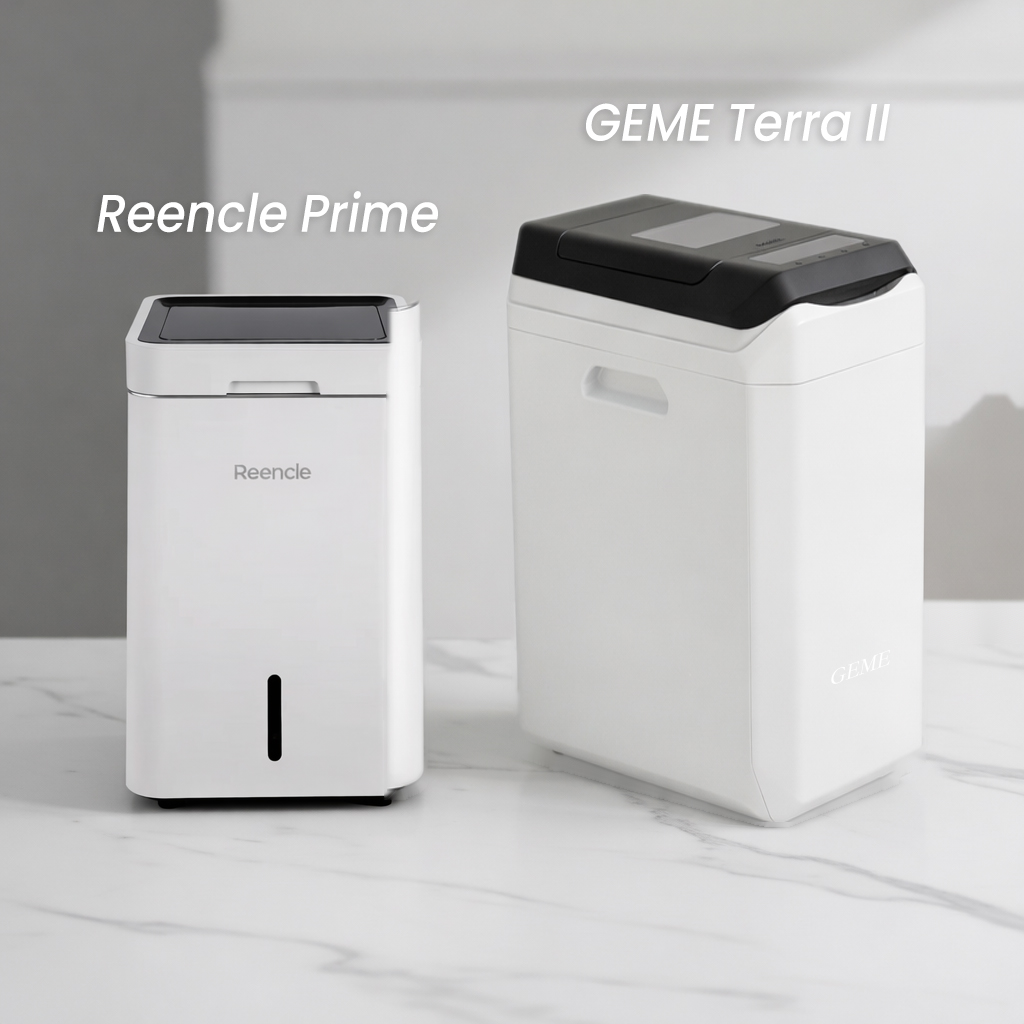
Reencle vs. GEME: The Ultimate Microbial Composter Showdown
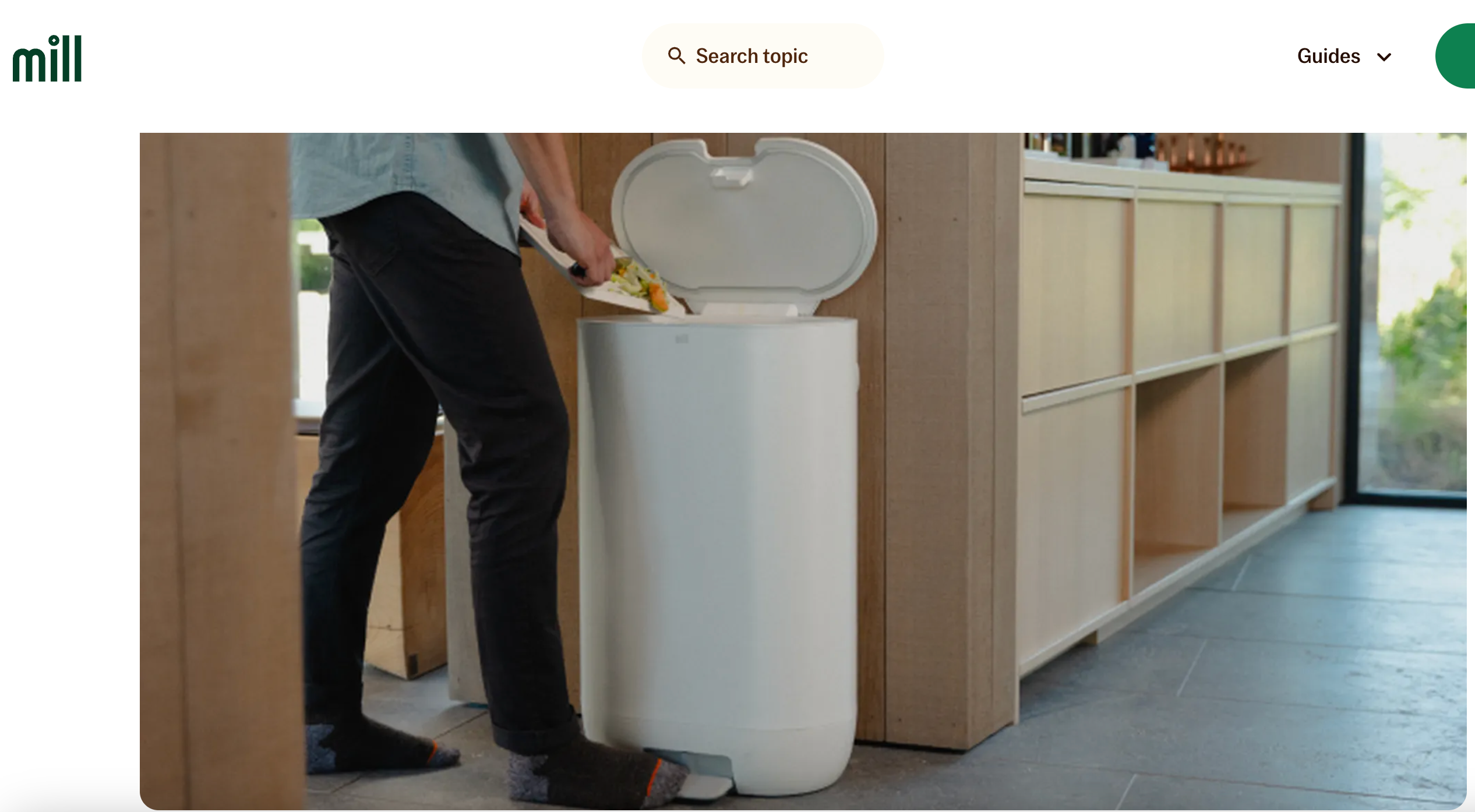
Does Mill Composter Really Compost? Honest Review & Best Kitchen Composter Guide 2026
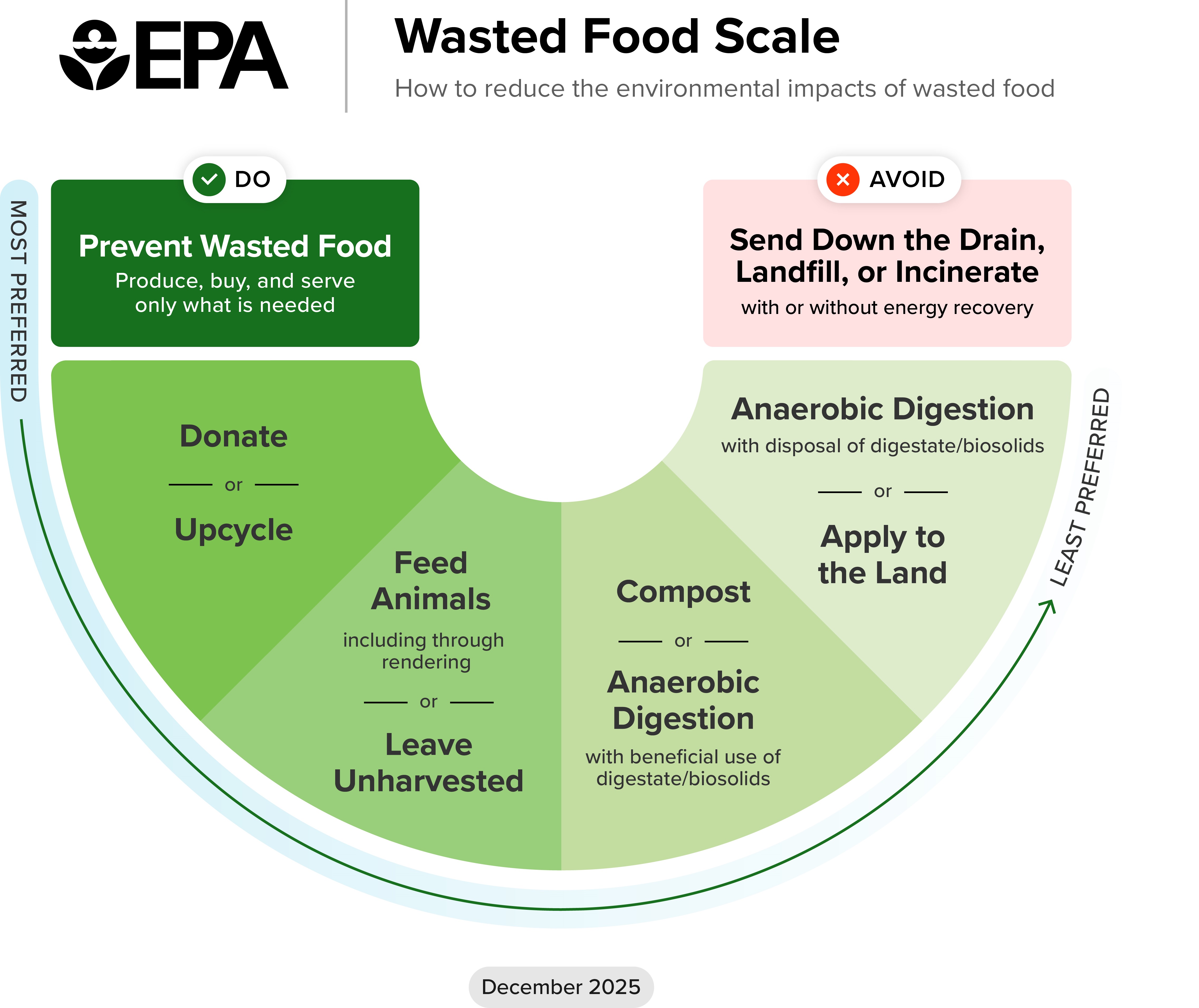
How to Reduce Food Waste at Home (Best Solution 2026)

McDonald’s Free Caviar Kits Raise Concerns of Food Waste | 2026 Composting Insights
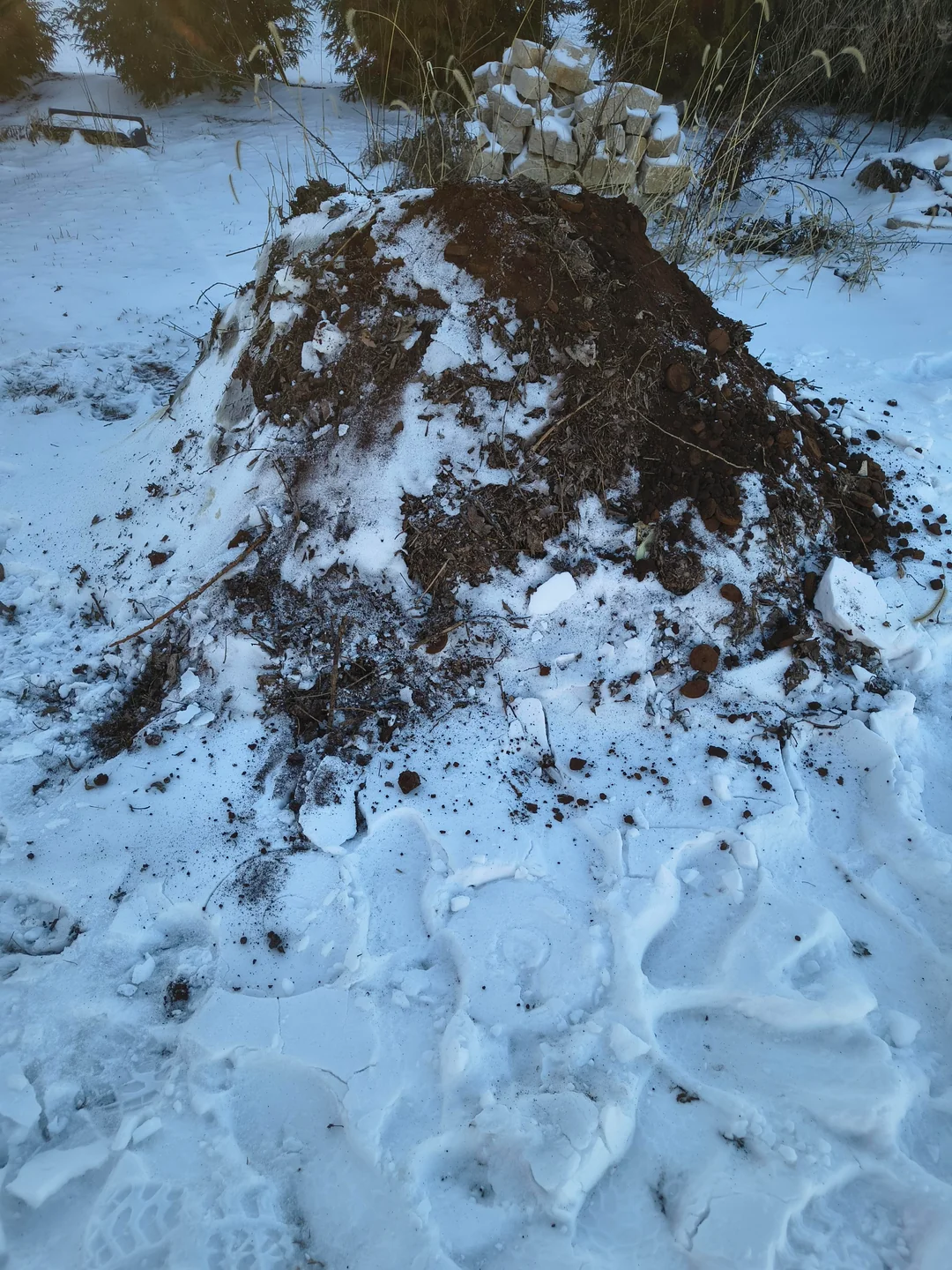
Winter Composting Crisis: How the 2026 Bomb Cyclone Makes Indoor Composting Essential
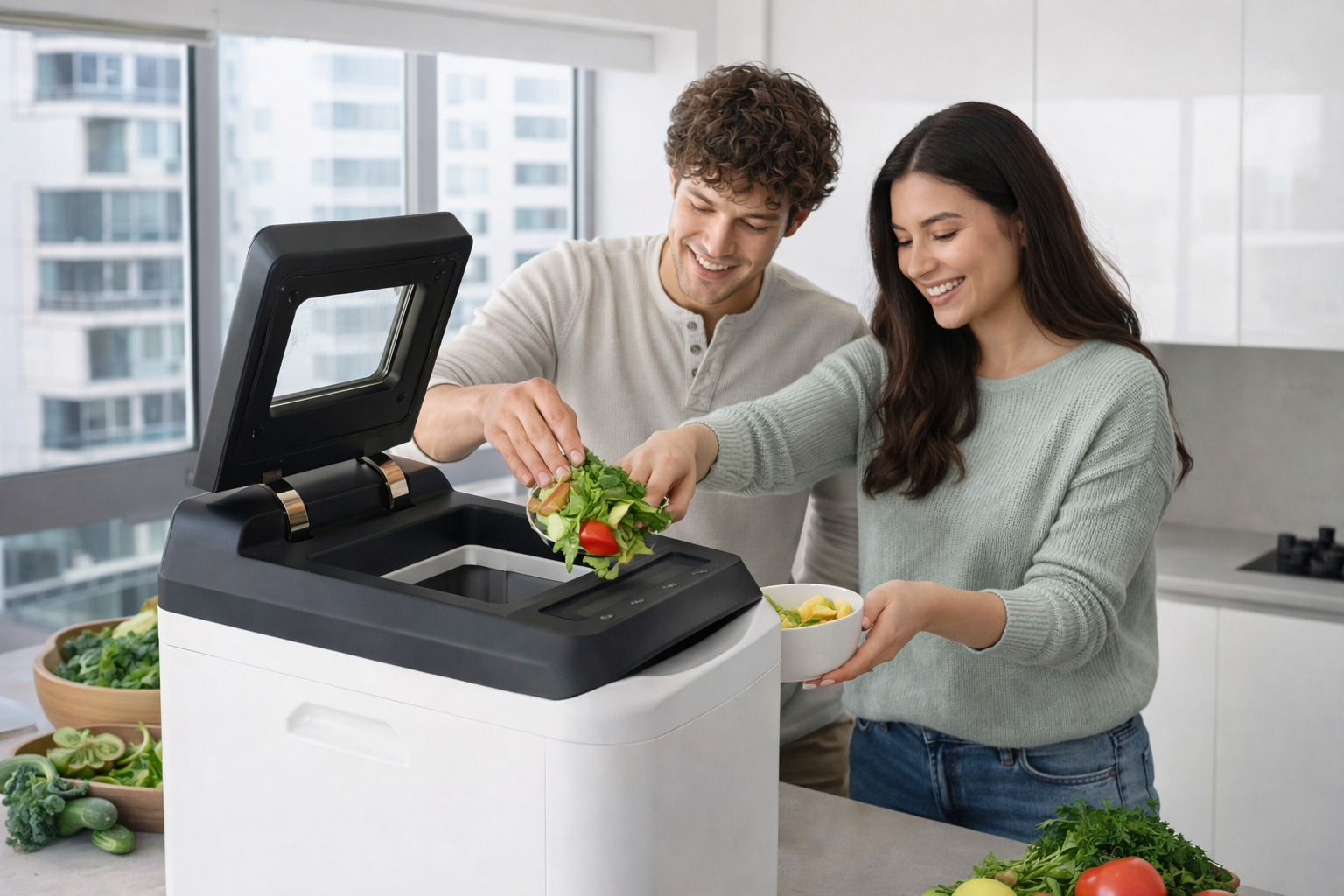
How to Compost in an Apartment (Best Solution 2026)

Zero-Waste Lifestyle Starts in Your Kitchen: How to Reduce Food Waste with GEME Terra 2 (Best Kitchen Composter Guide)
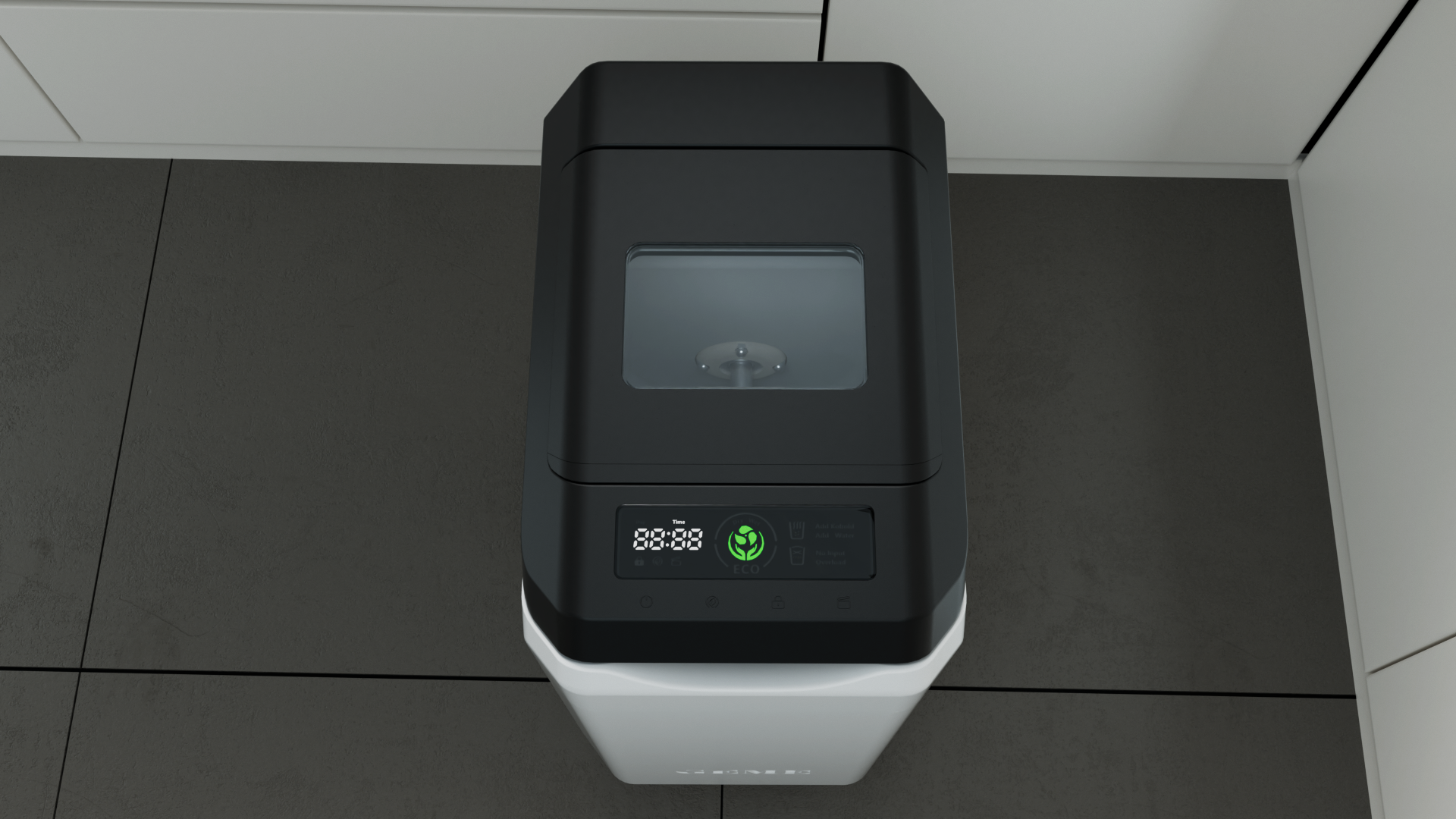
Does the Lomi Composter Really Compost? Lomi vs GEME Terra 2
Top 5 Kitchen Composters in 2026
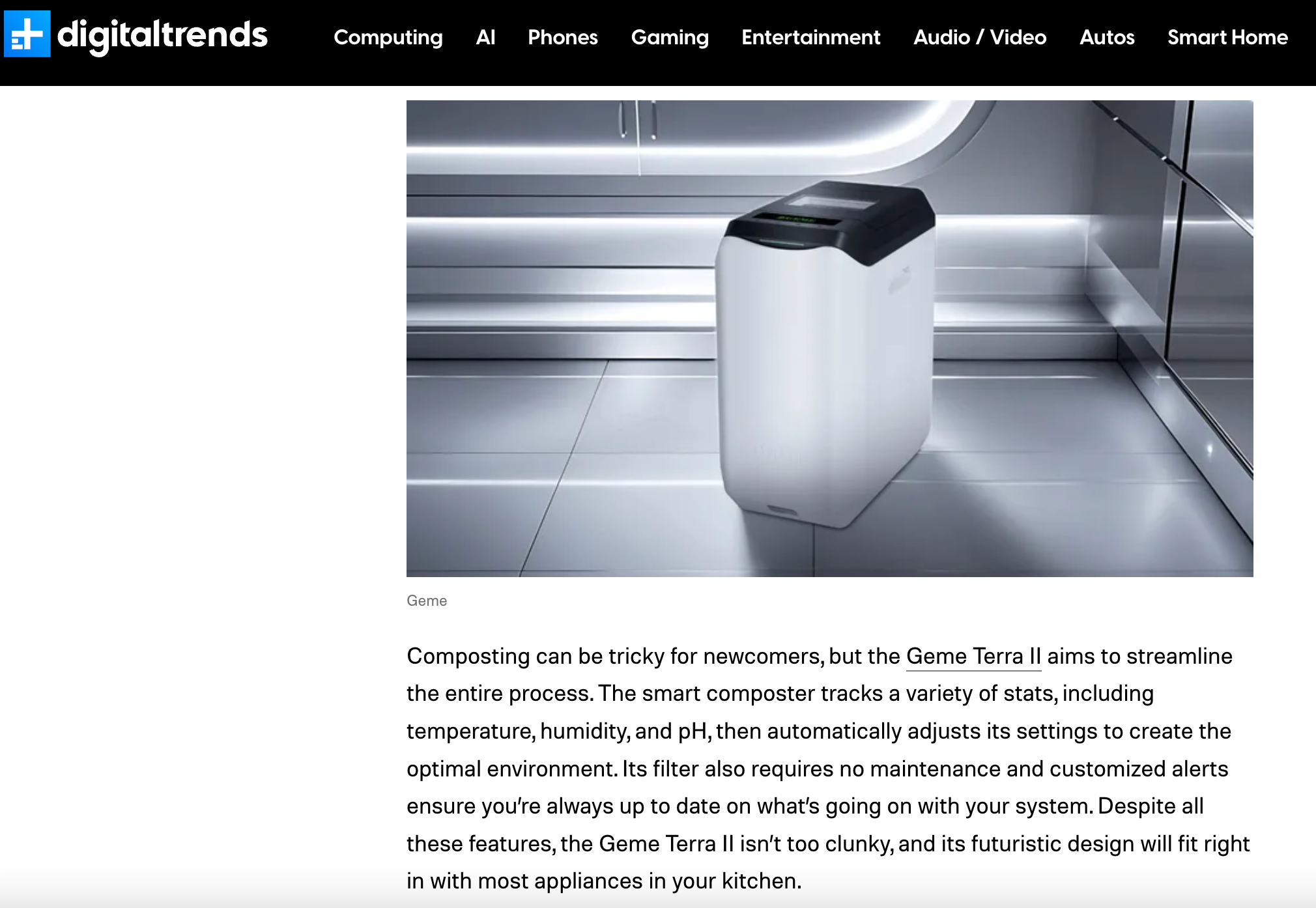
Best Kitchen Composters in 2026: GEME Terra II Redefines “Real Compost”
GEME Terra 2 vs Reencle Composter: 2 different Microbial Composting Approaches
GEME Terra 2 vs Mill Composter: The 2026 Decision Guide
The Best Electric Kitchen Composter of 2026

Mastering the GEME Cycle: An Agronomist’s Guide to Continuous-Flow Compost Application
Geme Terra 2 vs Lomi: Which Countertop Composter Is Better for a Zero Waste Home?
Electric Compost Bin Filters Cost: GEME vs Lomi vs Mill vs Reencle
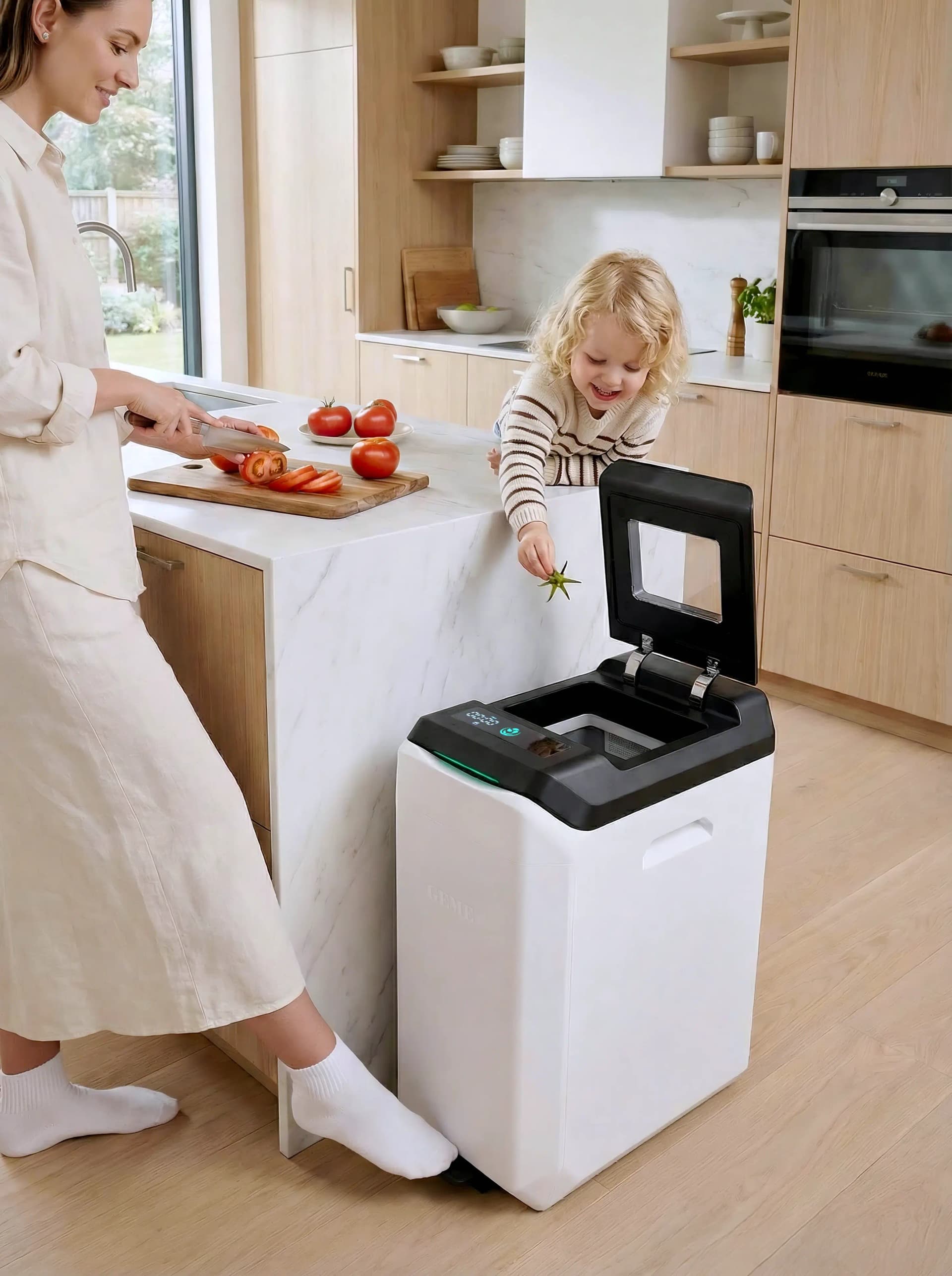
Bio-Composting Breakthroughs: GEME Terra 2 Debuts, An Easier & Smarter Way To Compost At Home
Can You Compost Bread?
Can I Compost Spoiled or Moldy Fruit Like Grapes? Here's A Practical Guide
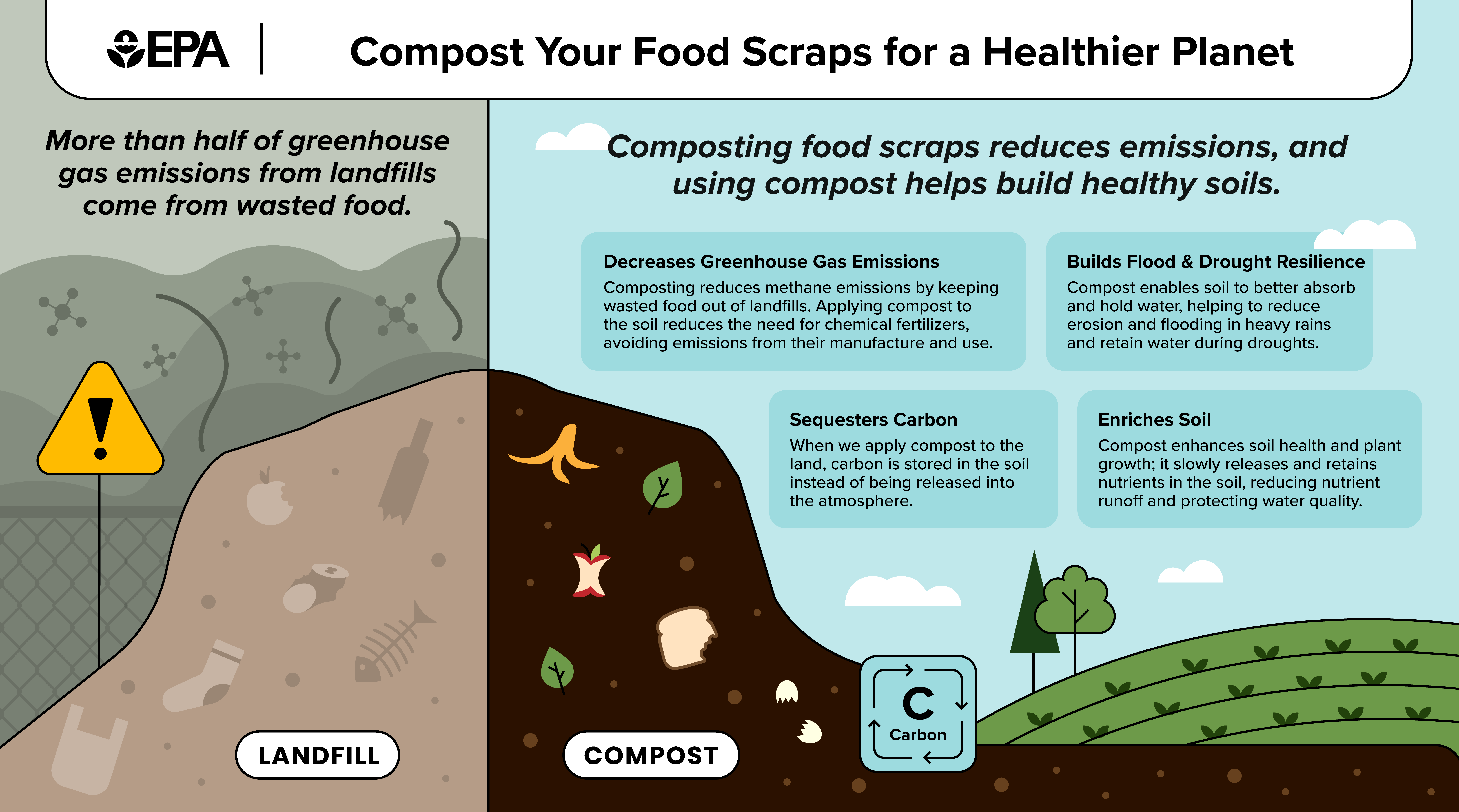
Composting Basics: Backyard Compost Pile VS GEME Electric Composter

How Can We Make Bananas Last Longer?

How Long Do Apples Last in The Fridge? An Ultimate Guide For You to Keep Apples Fresh
The Best Kitchen Composter For Reducing Food Waste | Which One is Your Favourite?
Ready to transform your gardening game? Subscribe to our newsletter for expert composting tips and sustainable gardening advice.